

 By
By Written by The Pet Blueprint, Researched using guidelines from AAFCO, AVMA, and ASPCA
Your dog got into a scuffle with a fox in the garden last week. You checked for wounds, found nothing obvious, and moved on. Now you’re lying awake wondering: when was that last rabies shot? Is it still valid? How long is it even good for? These are the questions that matter. Rabies doesn’t give you time to figure things out after the fact. The vaccine is the only real protection, and it works, but only when the schedule is followed correctly. Here’s everything you need to know.
Disclaimer: This content is for informational purposes only and does not replace professional veterinary advice. Always consult a licensed veterinarian for your dog’s vaccination schedule and any potential rabies exposure.
Table of Contents
Quick answer: rabies vaccine for dogs
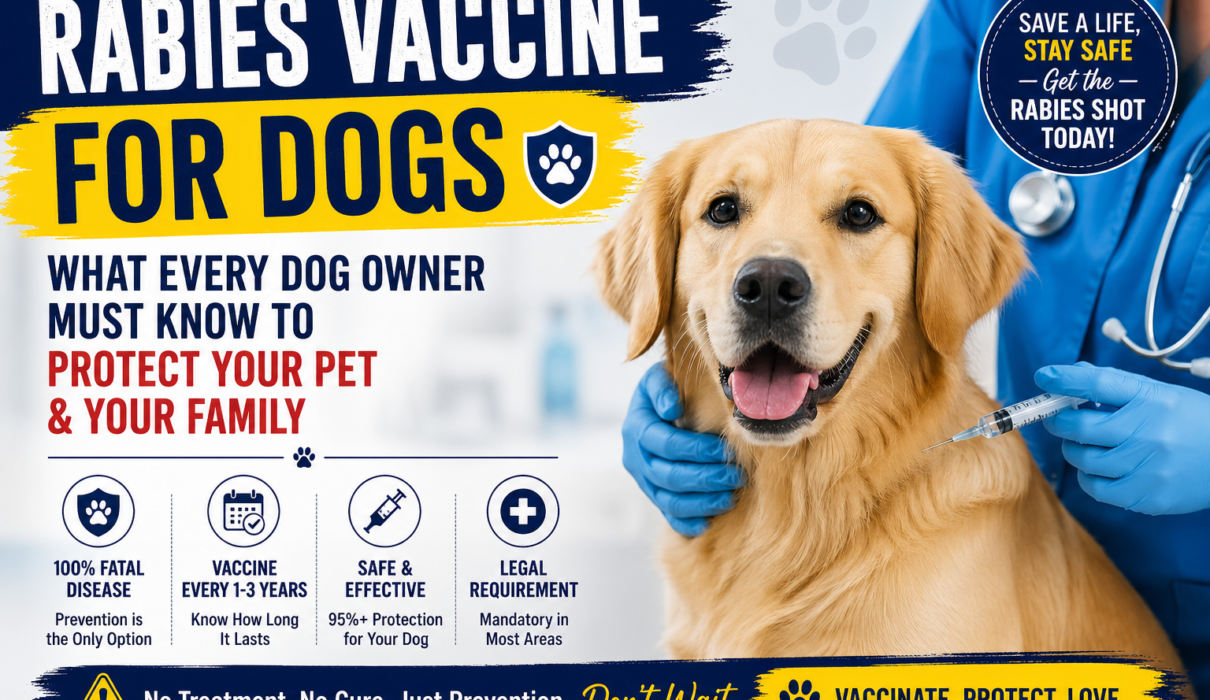
The rabies vaccine for dogs is given first at 12 to 16 weeks old, with a booster at 1 year, then every 1 to 3 years depending on the vaccine type and local law. It’s over 95% effective when given on schedule, according to the Merck Veterinary Manual. In most US states it’s legally required. In the UK it’s mandatory for international travel. There is no treatment for rabies once symptoms appear. The vaccine is the only option.
What counts as being behind on rabies vaccination?
Some owners assume a dog is “covered” as long as they’ve had at least one shot at some point. That’s not how it works.
Your dog’s protection lapses when:
- The 1-year booster wasn’t given after the puppy shot
- The certificate has passed its expiry date (printed on the vaccine record)
- A 1-year vaccine was given but treated as a 3-year vaccine
- Records have been lost and the vaccination history is unknown
Any of those situations means your dog should be treated as unvaccinated for legal and medical purposes. If there’s any doubt about your dog’s current status, a vet visit to check records and update vaccinations is the right call.
What is rabies and how do dogs get it?
1. How rabies spreads
Rabies is a viral disease that attacks the central nervous system. Dogs get it through contact with an infected animal, almost always via a bite wound. The virus travels in saliva and moves from the bite site directly toward the brain.
According to the CDC, rabies kills around 59,000 people globally each year, with dogs responsible for approximately 99% of human cases. In countries with strong canine vaccination programmes, those numbers drop sharply. Vaccinating your dog is a direct public health measure, not just a personal one.
2. How quickly it progresses
The incubation period varies from a few days to several months depending on the location of the bite and the amount of virus introduced. Once clinical signs appear, the outcome is almost always fatal. The Merck Veterinary Manual confirms there is no effective treatment once the virus reaches the brain.
3. The two forms of rabies in dogs
Furious rabies causes sudden aggression, erratic behaviour, and unprovoked attacks. A calm dog can become completely unrecognisable within hours.
Paralytic rabies causes progressive weakness, difficulty swallowing, excessive drooling, and eventually full paralysis.
Both forms end the same way. There is no recovery.
When should you be concerned?
Contact your vet the same day ,not at your next scheduled appointment, if:
- Your dog has been bitten or scratched by a wild animal, stray dog, or any animal of unknown vaccination status
- Your dog has had contact with a bat, even without a visible bite (bat bites are small and easy to miss)
- Your dog is showing sudden unexplained behavioural changes, aggression, or neurological symptoms
- Your dog’s vaccination certificate has expired by any amount of time and they’ve had potential wildlife contact
- Your dog has never been vaccinated and has been in contact with wildlife
- Your dog showed a reaction after a previous rabies vaccine (so your vet can plan the next one safely)
For vaccine reactions specifically: facial swelling, hives, vomiting, or collapse within an hour of vaccination are emergencies. Go directly to a vet.
What you can do at home
There’s no home treatment for rabies exposure. What you can do is manage the schedule and reduce the risk of exposure in the first place.
- Keep vaccination records somewhere accessible. A photo of the certificate on your phone means you always have it. Vets send reminders, but systems fail. Your own record is the backup.
- Know the difference between a 1-year and 3-year vaccine. The certificate will specify which type was given and when the next dose is due. Don’t assume check.
- Set a calendar reminder for the next booster date. Do this the day you get home from the vet appointment, not when the reminder arrives.
- Keep your dog away from wildlife. Don’t let your dog investigate dead animals or approach unfamiliar wildlife. Supervise off-lead time at dawn and dusk when foxes, raccoons, and bats are most active.
- After any potential exposure, call your vet immediately. Don’t wait to see if symptoms develop. The post-exposure window is critical and hours matter.
- For puppies not yet vaccinated, limit wildlife exposure. Keep them on-lead in areas where wildlife contact is possible until their vaccine schedule is complete.
Rabies vaccine schedule: what works and what doesn’t help
What actually protects your dog:
- First rabies vaccine at 12 to 16 weeks old
- 1-year booster (mandatory, this is what locks in lasting protection)
- Subsequent boosters every 1 to 3 years depending on vaccine type and local law
- Keeping the certificate current and knowing its expiry date
- Reporting any potential exposure immediately regardless of vaccination status
Won’t provide meaningful protection:
- A single puppy shot with no follow-up booster
- Assuming a 1-year vaccine is valid for 3 years
- Relying on the fact that your dog is mostly indoors (bats can enter any home)
- Natural immunity, there is no meaningful natural immunity to rabies in dogs
- Delaying the vet visit after potential exposure to “see how things go”
The honest position on timing: the 1-year booster isn’t optional. Many owners skip it assuming the puppy shot “should be enough for now.” The immune response from that first shot fades. The booster is what builds lasting protection, and skipping it resets your dog’s legal vaccination status in many regions.
What you should avoid
- Don’t skip the 1-year booster. It’s the most commonly missed step and the one that matters most for building lasting immunity.
- Don’t assume indoor dogs are automatically safe. Bats regularly enter homes and are a significant rabies vector even in the UK.
- Don’t ignore mild post-vaccine symptoms that last beyond 48 hours. Lethargy for a day is normal. Lethargy plus swelling that grows over 3 days is not.
- Don’t delay after potential exposure. There is a window for post-exposure intervention. Waiting costs that window.
- Don’t rely on a lost or approximate vaccination record. If you can’t confirm the date and type, tell your vet that directly. They’ll advise whether to restart the schedule.
- Don’t travel internationally with your dog without confirming current vaccine status. Requirements vary by country and an expired certificate means your dog won’t travel.
When to visit a veterinarian
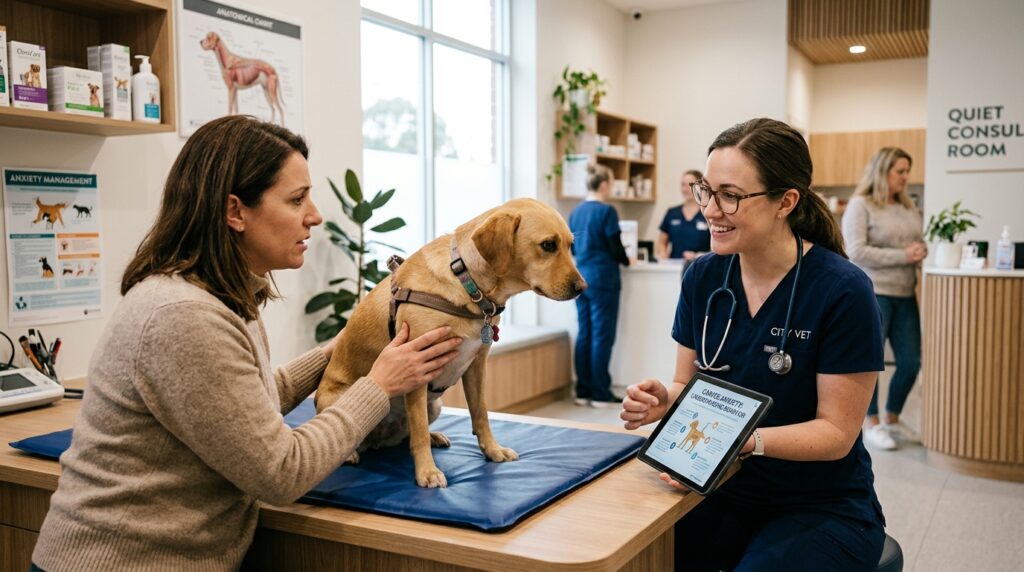
Book an appointment if:
- Your dog has never been vaccinated against rabies
- The vaccination certificate is expired or you’re unsure of the current status
- You’re not certain whether the last vaccine was a 1-year or 3-year formulation
- You’re planning international travel and need to confirm requirements and timing
- Your dog had a reaction to a previous rabies vaccine
- The booster is overdue by any amount of time
For potential exposure: call the same day rather than booking a routine appointment. Most practices will fit you in immediately for a suspected rabies exposure.
Your vet may refer you to a veterinary infectious disease specialist for complex exposure cases, particularly if the animal involved was confirmed rabid or if your dog is immunocompromised.
Real-life scenario
A Labrador in Manchester had been vaccinated as a puppy and received his 1-year booster without issue. His owner assumed the 3-year vaccine label on the certificate meant no appointment was needed until year 4. Three years later, the dog got into a brief scuffle with a fox in the garden at dusk.
The owner called the vet the next morning. On checking records, the vet found the last vaccine had been a 1-year formulation, not a 3-year one. The certificate had lapsed 18 months earlier.
Because the exposure involved a fox (a known rabies vector in continental Europe) and the dog was technically unvaccinated at the time of exposure, the vet administered an immediate booster and the dog was monitored for 45 days as a precaution.
No illness developed. The owner now photographs every vaccine certificate the same day it’s issued and sets a calendar reminder for the expiry date.
The lesson: knowing the difference between a 1-year and 3-year vaccine, and actually keeping the record, matters far more than most owners realise until it doesn’t.
Frequently asked questions
How long does a rabies jab last in dogs? It depends on the vaccine type. Some formulations are licensed for 1 year; others for 3 years. The expiry date is printed on the certificate your vet provides. Local law can also affect which schedule is considered legally compliant, so check both the certificate and your regional requirements.
When can puppies get the rabies shot? The earliest is 12 weeks (3 months). Most vets recommend between 12 and 16 weeks for the first dose. A mandatory booster follows at around 12 to 16 months. Without that booster, the puppy shot alone doesn’t provide reliable ongoing protection.
How much does a rabies shot cost for a dog? In the UK, typically £20 to £60 depending on the practice. In the US, around $15 to $40 at most clinics, with low-cost vaccination clinics bringing this lower. It’s consistently one of the most affordable vaccinations available.
What are the side effects of the rabies injection in dogs? Most dogs experience nothing beyond mild tiredness for 24 to 48 hours. A small firm lump at the injection site is common and resolves on its own. Rare but serious reactions include facial swelling, hives, vomiting, or collapse. These require immediate veterinary attention.
What happens if an unvaccinated dog is exposed to rabies? Depending on location and the nature of the exposure, options may include strict quarantine for several months at the owner’s expense, or in high-risk cases, euthanasia may be recommended by public health authorities. These are standard protocols, not worst-case scenarios. The stakes of skipping vaccination are real.
Read more on thepetblueprint.com
- Thinking about getting a dog? Read our guide to the 12 best family dogs for real households before you decide on a breed.
- If you have a new puppy still working through their vaccine schedule, our potty training guide using puppy pads covers what your puppy should and shouldn’t be doing during those early weeks.
- For a full breakdown of what the rabies vaccine involves, visit our dedicated page on the rabies vaccine for dogs.
The short version
The rabies vaccine for dogs is straightforward, inexpensive, and highly effective. First shot at 12 to 16 weeks, booster at 1 year, then every 1 to 3 years depending on the vaccine type. Keep the certificate. Know the expiry date. If there’s ever a potential exposure, call your vet the same day. Rabies moves fast once it’s in the body, and the only real protection is staying current on the schedule before anything happens.
Sources:
- Centers for Disease Control and Prevention (CDC) — cdc.gov
- Merck Veterinary Manual — merckvetmanual.com
- American Veterinary Medical Association (AVMA) — avma.org
- American Kennel Club — akc.org
- ASPCA Animal Poison Control and Pet Care — aspca.org






3 Comments