


 By
By Written by The Pet Blueprint, Researched using guidelines from AAFCO, AVMA, and ASPCA
Disclaimer: This content is for informational purposes only and does not replace professional veterinary advice. Always consult a licensed veterinarian or certified breeder before choosing a dog breed for your family.
Every family thinks they want a dog. Fewer are ready for the right one.
You’ve watched your kids beg for a puppy for three months. Maybe you’ve already started browsing. Golden Retriever. Labrador. Possibly a Poodle because someone told you they don’t shed.
Here’s the thing: most “best family dog” lists just rank breeds by popularity. They don’t tell you that a Border Collie will destroy your house if it doesn’t get 2 hours of exercise a day. Or that a Bulldog is genuinely great for a quieter household but will struggle in a family that hikes every weekend.
This guide is different. Each breed on this list is here for a specific reason, with honest notes about who it actually suits.
Table of Contents
Quick answer: what makes a dog good for families?
The best family dogs share a few traits: stable temperament around unpredictable kids, trainability, and the ability to switch off when the house calms down.
Size alone doesn’t determine it. Energy level does. A small dog with high anxiety is harder to manage than a calm large breed. Match the dog’s energy to your household’s energy, and you’re most of the way there.

1. Labrador Retriever
Labs are the most popular family dog in the US for a reason that goes beyond marketing. They’re genuinely tolerant, they bounce back fast from a toddler pulling their ear, and they respond well to basic training from an early age.
The honest catch: Labs have high energy well into their third year. A bored Lab chews furniture. A walked Lab is one of the most relaxed dogs you’ll find indoors.
Best for: Active families with kids of any age, first-time dog owners.
- Weight: 55–80 lbs
- Energy: High
- Grooming: Moderate (sheds seasonally, brush weekly)
According to the American Kennel Club, the Labrador Retriever has held the top spot in US breed registrations for over 30 consecutive years. (Source: AKC Most Popular Dog Breeds)

2. Golden Retriever
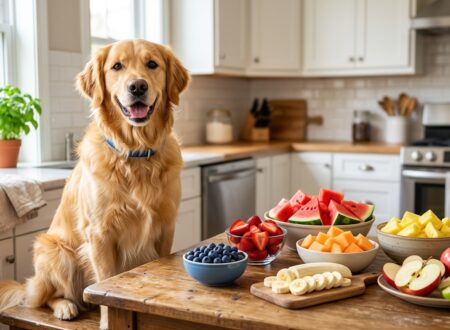
Goldens are patient in a way that feels almost unrealistic. They tolerate noise, sudden movements, and small children reasonably well. They’re also one of the most trainable breeds on this list, which matters when you’re managing a busy household.
Their grooming needs are real, though. That beautiful coat sheds constantly and mats if you skip brushing for a week. Budget for regular grooming or invest in a good brush and about 20 minutes a week.
Best for: Families who want a gentle, devoted dog and don’t mind some grooming effort.
- Weight: 55–75 lbs
- Energy: High
- Grooming: High (brush 3–4 times weekly)

3. Beagle
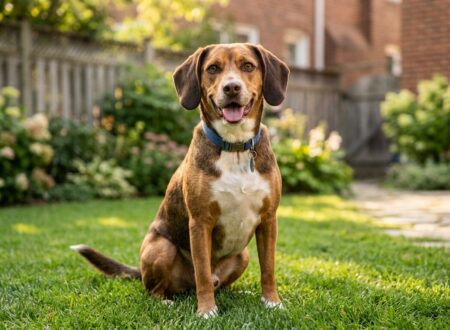
Beagles are small to medium sized, curious, and genuinely good with kids. They’re sturdy enough to handle rough play, friendly enough to get along with most other dogs, and curious enough to keep children entertained for hours.
The honest catch: Beagles follow their nose before their ears. Recall training takes time and consistency. They’re also vocal when bored proper exercise heads that off.
Best for: Families with outdoor space and active kids aged 5 and up.
- Weight: 20–30 lbs
- Energy: High
- Grooming: Low (brush weekly)

4. Cavalier King Charles Spaniel
The Cavalier is the best small dog for families on this list. Gentle, calm, and genuinely affectionate without being needy. They adapt well to apartment living and don’t need the exercise volume that larger breeds do.
They’re also good with younger children because they’re not skittish, most Cavaliers are relaxed around noise and activity in a way that smaller terrier breeds aren’t.
Best for: Families in apartments, households with younger kids, first-time owners.
- Weight: 13–18 lbs
- Energy: Moderate
- Grooming: Moderate (brush a few times a week)
If you’re looking for small dogs that are good for families, the Cavalier is consistently near the top of what veterinary behaviorists recommend. (Source: ASPCA Dog Breed Information)
5. Poodle (Standard)
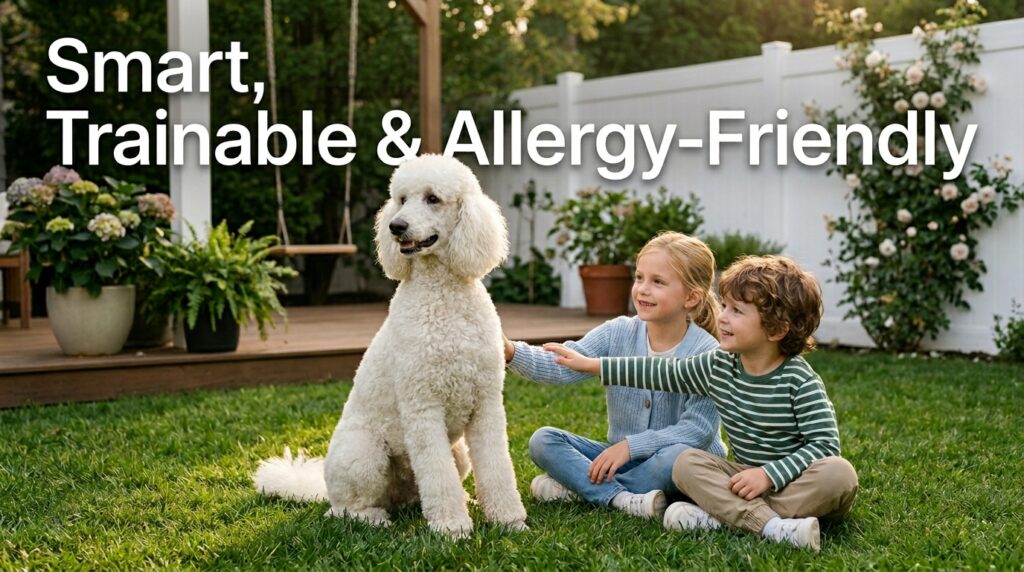
Standard Poodles are on this list and not the toy or miniature versions, because standard Poodles are genuinely robust family dogs with high intelligence and low shedding. Toy Poodles can be more fragile around young kids.
They’re one of the few top-rated house dogs that combine size, trainability, and a hypoallergenic coat. Families with allergies should seriously consider them.
The grooming is real. A Poodle coat mats quickly without regular care. Professional grooming every 6–8 weeks is the realistic commitment here.
Best for: Families with allergies, households that want a smart, trainable dog.
- Weight: 45–70 lbs
- Energy: Moderate to high
- Grooming: High (professional grooming every 6–8 weeks)

6. Boxer
Boxers are loyal, playful, and protective without being aggressive. They’re physically solid and can handle rough play with older kids. Most Boxers are also genuinely patient, they’ve got a high threshold for chaos, which helps in busy households.
They do need exercise. A Boxer that’s under-exercised bounces off walls. Give them 45–60 minutes of real activity daily and they’re calm, affectionate house dogs.
Best for: Active families with school-aged kids, homes with a yard.
- Weight: 50–80 lbs
- Energy: High
- Grooming: Low (occasional brush)

7. Bernese Mountain Dog
Berners don’t get mentioned enough in best family dog conversations. They’re large, calm, patient with children, and surprisingly gentle for their size. They tend to be quieter and more settled than Labs or Goldens, which suits households that want a big dog without the high-energy demands.
The honest downside: their lifespan is shorter than most breeds on this list (7–10 years on average), and they’re prone to joint issues as they age. Worth knowing before you commit.
Best for: Families who want a large, calm dog; homes with space; families ready for a gentle giant.
- Weight: 70–115 lbs
- Energy: Moderate
- Grooming: High (sheds heavily, brush several times a week)

8. Irish Setter
Irish Setters are one of the friendliest dog breeds you’ll find. They’re enthusiastic, social, and great with kids who match their energy. They also happen to be beautiful, which isn’t a reason to pick a dog but does make walks more enjoyable.
They need real exercise, not just a lap around the block. Families who run, hike, or have large outdoor space will get the best out of an Irish Setter. In a sedentary household, they get destructive fast.
Best for: Active families, homes with large yards, families who enjoy outdoor activities.
- Weight: 60–70 lbs
- Energy: High
- Grooming: High (brush regularly to prevent matting)

9. Bulldog
Bulldogs make excellent family pets for the right household. They’re calm, loyal, and surprisingly affectionate. Their low energy level makes them genuinely good house dogs for families without a yard or in smaller spaces.
They don’t do well in heat, which is worth knowing if you live somewhere with hot summers. And they snore. Loudly. (This is mentioned because it surprises first-time Bulldog owners more than almost anything else.)
Best for: Apartment families, households wanting a low-energy dog, families with younger children.
- Weight: 40–50 lbs
- Energy: Low to moderate
- Grooming: Low (wipe facial folds weekly)

10. Collie
Lassie made Collies famous, but the breed earns its reputation independently. Collies are loyal, alert, and gentle with children. They’re also one of the easier herding breeds to manage as a family pet because they’ve been bred for close partnership with humans over centuries.
They do have herding instincts that show up occasionally, some Collies will try to herd small children by nudging them. Early training addresses this easily.
Best for: Families wanting an intelligent, devoted dog with a calm temperament.
- Weight: 50–75 lbs
- Energy: Moderate to high
- Grooming: High (double coat, sheds seasonally)

11. Vizsla
The Vizsla is an underrated family dog. Hungarian in origin, they’re affectionate, gentle, and have a natural connection to their owners that makes them highly trainable. They’re also athletic without being hyperactive indoors, provided they get enough daily exercise.
They don’t do well when left alone for long periods. If someone’s home most of the day, a Vizsla thrives. If the whole family is out from 8am to 6pm daily, it’s probably not the right fit.
Best for: Families where someone’s home regularly, active families, older kids.
- Weight: 44–60 lbs
- Energy: High
- Grooming: Low (short coat, minimal brushing)
12. Shih Tzu
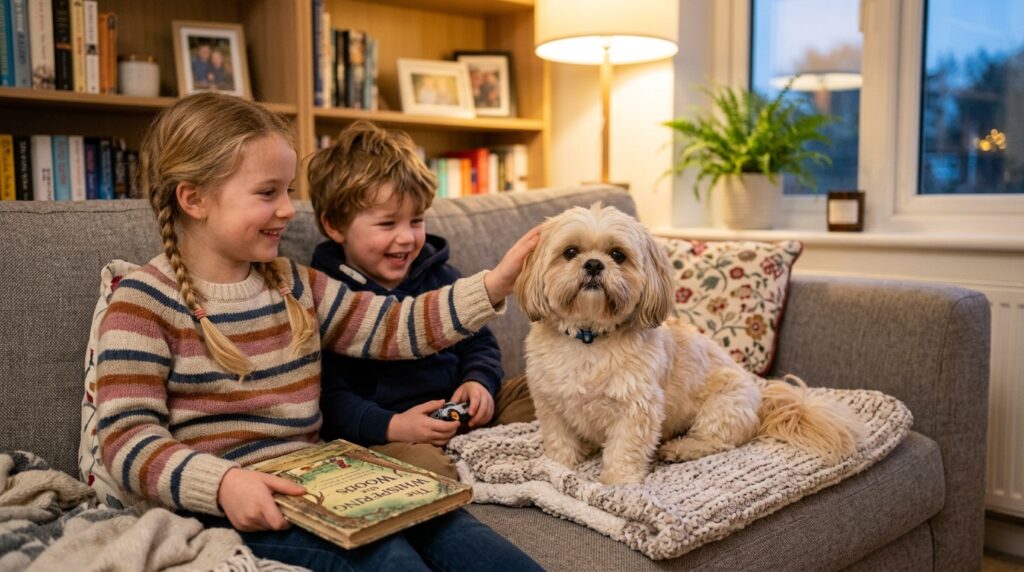
Shih Tzus are affectionate, calm, and genuinely good with children, especially in households where kids are a bit older and understand how to handle a small dog. They’re well-suited to apartment living and don’t need significant outdoor exercise.
Their coats require regular maintenance. Without consistent brushing, the coat mats quickly. Many owners opt for a shorter “puppy cut” to reduce the grooming load.
Best for: Apartment families, households with older kids, families wanting a small, calm companion.
- Weight: 9–16 lbs
- Energy: Low to moderate
- Grooming: High (daily brushing or regular professional grooming)
When should you be concerned?
Any dog can bite, regardless of breed. Watch for these signs that your family dog is stressed and needs intervention:
- Growling or snapping when approached during eating or sleeping
- Tucked tail and flattened ears around children consistently
- Hiding or avoidance that gets more frequent over time
- Stiff body posture when kids approach
These aren’t signs of a bad dog. They’re signs of a dog that needs better management, clearer boundaries, or professional training support. A certified dog trainer or veterinary behaviorist can help before small issues escalate.
What you can do before you bring a dog home
Getting the breed right is only half the job. Here’s what actually prepares your family:
- Research the adult version, not the puppy. Puppies of almost every breed are adorable. The adult temperament and size are what you’ll live with for 10–15 years.
- Visit the breed in person before committing. Breed-specific rescues and reputable breeders will let you spend time with adult dogs. Do this.
- Prepare your kids. Teach children how to approach a dog before the dog arrives, no running at them, no pulling tails, let the dog sniff first.
- Have a vet lined up. Book a health check within the first week of bringing any new dog home.
- Budget honestly. Food, vet visits, grooming, training, and boarding add up. The ASPCA estimates annual dog ownership costs between $1,000–$4,000 depending on size and health needs. (Source: ASPCA Pet Care Costs)
What you should avoid
- Don’t choose a breed based on looks alone (Border Collie puppies are stunning; adult Border Collies need a job or they suffer)
- Don’t skip puppy training classes, even calm breeds benefit from early structure
- Don’t get a high-energy breed if your household is genuinely low-activity
- Don’t assume small means easy: some small breeds have higher anxiety and reactivity than large breeds
When to visit a veterinarian
See a vet before or shortly after bringing your new dog home if:
- You’re unsure which breed suits a family member with allergies
- Your dog shows any signs of aggression or extreme anxiety within the first weeks
- You’re choosing a breed with known health issues (Bulldogs, Bernese Mountain Dogs) and want a realistic health picture
- Your children have had negative experiences with dogs, a vet or behaviourist can help you plan a safe introduction
Real-life scenario
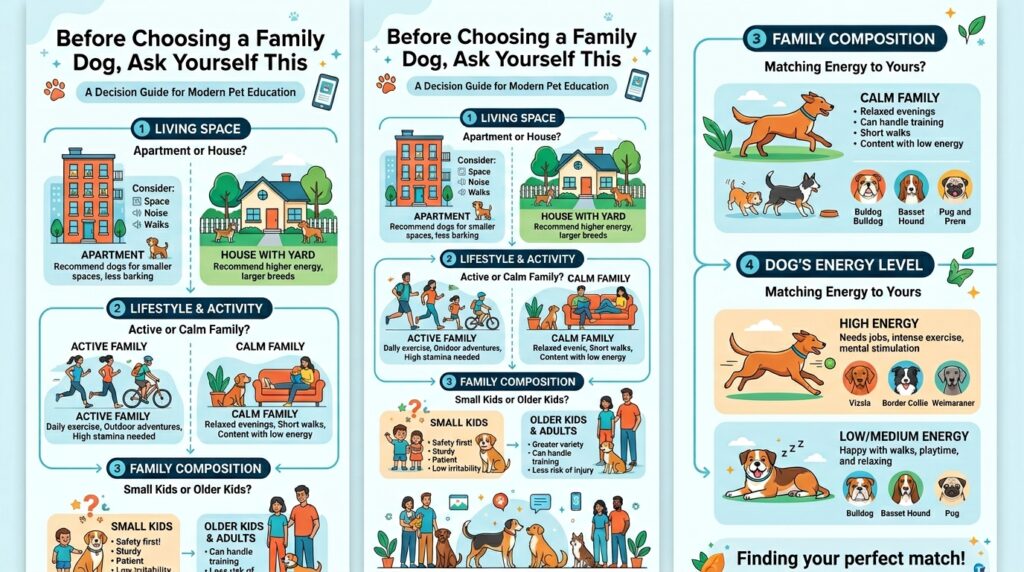
A family with 2 kids (ages 4 and 7) and a small apartment got a Border Collie because the breeder said they were “smart and great with kids.” Both things are true.
What the breeder didn’t mention: Border Collies bred for herding work need 2+ hours of vigorous activity daily plus mental stimulation. In an apartment with a family that walked 30 minutes daily, the dog became anxious, started herding the 4-year-old, and destroyed furniture when left alone.
They rehomed the dog, a painful outcome for everyone and eventually found a Cavalier King Charles Spaniel that suited their lifestyle perfectly.
The lesson: energy match matters more than temperament ratings on paper.
Frequently asked questions
What is the friendliest dog breed for families? Golden Retrievers and Labrador Retrievers consistently rank at the top for friendliness, trainability, and patience with children. Cavalier King Charles Spaniels are the best pick among smaller breeds.
What are the best small dogs that are good for families? Cavalier King Charles Spaniel, Beagle, and Shih Tzu are the strongest choices. Each handles family life differently Cavaliers are calm and adaptable, Beagles are active and playful, Shih Tzus are affectionate lap dogs.
Are good family puppies different from good family adult dogs? The puppy phase is temporary. A breed’s adult temperament is what you’re actually selecting. Research adult behaviour, not puppy cuteness.
What’s the best house dog for a family with young children under 5? Bulldogs, Cavalier King Charles Spaniels, and Golden Retrievers handle the unpredictability of toddlers well. High-energy working breeds are generally harder to manage around very young children.
Do dogs in family homes need more training than dogs owned by individuals? Yes, practically speaking. A dog in a family household encounters more people, more noise, and more unpredictable situations. Basic obedience training and clear household rules make the difference between a relaxed family dog and a stressed one.
Read more on thepetblueprint.com
- [How to read a dog food label: what every family dog owner should know — thepetblueprint.com]
- [German Shepherd puppies: what to expect in the first year — thepetblueprint.com]
- [Dog aggression vs reactivity: what’s the real difference and how to handle it — thepetblueprint.com]
The short version
The best family dog is the one that matches your household’s actual energy level, living situation, and time commitment — not the one that looked good in a film.
Labs and Goldens earn their popularity. But a Cavalier in an apartment will be happier than a Border Collie with a family that doesn’t exercise daily.
Pick the dog that fits the life you actually have, not the life you imagine you’ll have after the dog arrives.
Sources:
- American Kennel Club — akc.org
- ASPCA Pet Care and Costs — aspca.org
- American Veterinary Medical Association — avma.org
- American Kennel Club — akc.org
- ASPCA Pet Care and Costs — aspca.org
- American Veterinary Medical Association — avma.org



6 Comments