

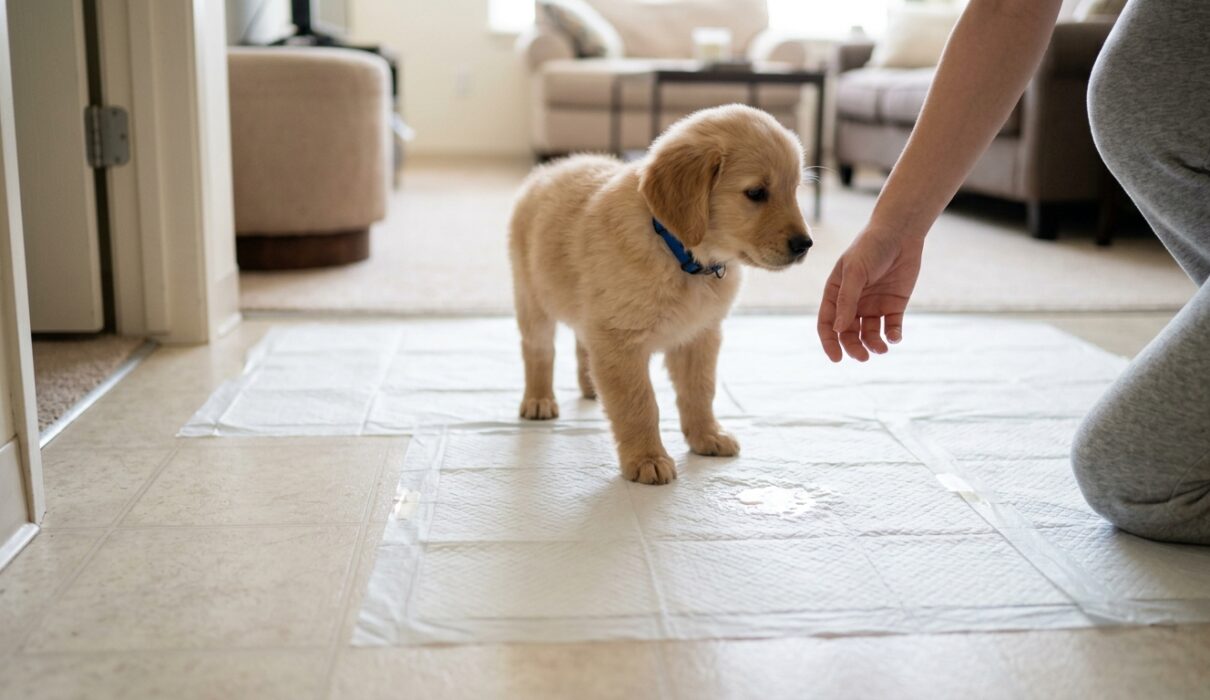
 By
By Written by The Pet Blueprint, Researched using guidelines from AAFCO, AVMA, and ASPCA
Let me save you months of frustration.
After 15+ years working with dogs, here’s the truth no one tells you:
Potty training isn’t hard.
Inconsistency is.
Most people fail because they “try things.”
What you need is a system.
And if you’re using puppy potty pads, this system becomes even more important.
Table of Contents
Why Puppy Pads Actually Make Sense (For Some Owners)
Everyone says “just take your dog outside.”
Sounds good… until reality hits.
- You live in an apartment
- You don’t have a backyard
- Your puppy isn’t fully vaccinated
- You can’t go outside every 20 minutes
That’s where tools like:
- puppy pee pads
- dog litter tray training setups
- bark potty systems
- puppy house training pads
…become not just useful — but necessary.
Step 1: Control the Environment (This Is Where Most People Mess Up)
Your puppy doesn’t need freedom.
They need structure.
So here’s what you do:
- Keep your puppy:
- On a leash with you
- Inside a small pen
- Or in a properly sized crate
If you give them full access to your house too early?
👉 They WILL choose their own toilet.
And once they do it once – they’ll go back there again and again.
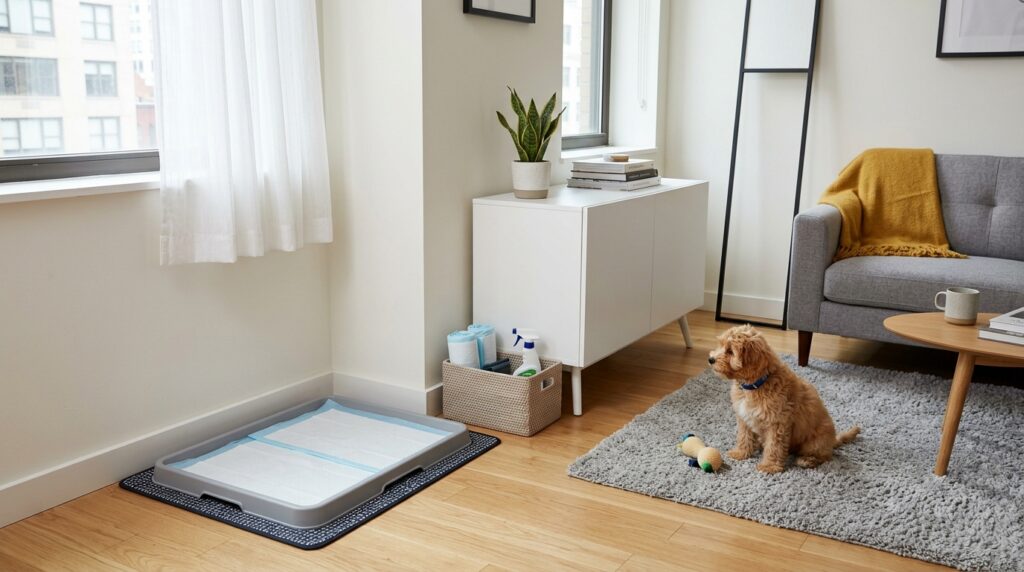
Step 2: Create a Dedicated “Dog Pad” Zone
Consistency builds habits.
Pick ONE spot and stick to it:
- dog pad area
- dog litter setup
- puppy potty pad corner
Don’t keep moving it.
Confusion = accidents.
Step 3: Timing Beats Everything
Here’s the rule most beginners ignore:
👉 Your puppy doesn’t have full bladder control until ~16 weeks.
And the formula:
Age in months + 1 hour = max hold time
So:
- 2 months = ~3 hours
- 4 months = ~5 hours
But don’t push it.
Take them to the pad:
- After waking up
- After eating
- After playing
- Every 1-2 hours minimum
Yes, it feels excessive.
But accidents cost more time than prevention.
Step 4: Watch for Signals (Your Puppy Is Already Talking to You)
Before every accident, there are signs:
- Sniffing the floor
- Circling
- Whining
- Suddenly stopping play
Miss these signals = you lose control.
Catch them early → immediately guide them to the puppy potty pad.
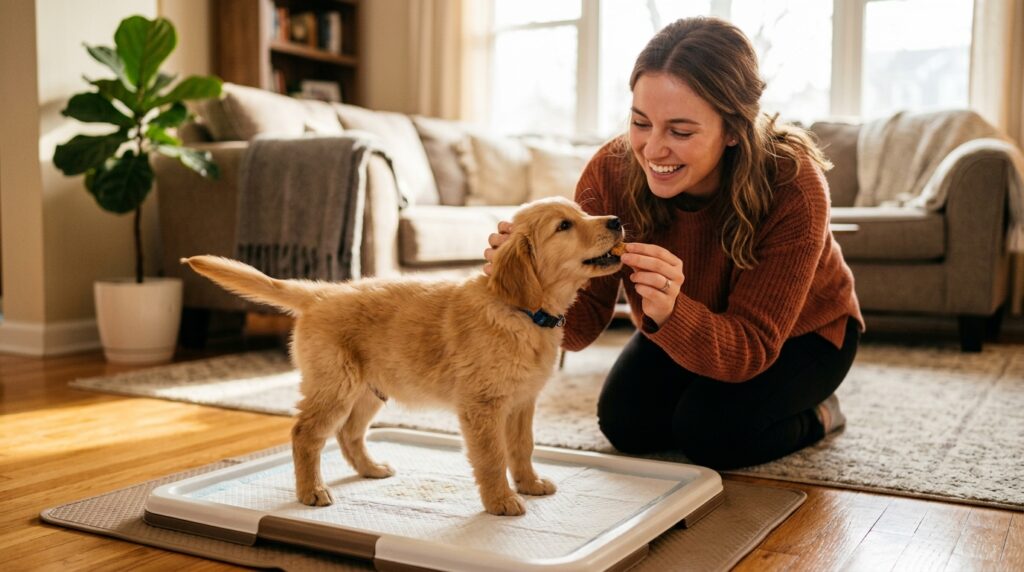
Step 5: Reward Like It’s a Big Deal
Dogs repeat what gets rewarded.
So when your puppy:
👉 pees on pad
👉 or uses the right spot
You:
- Praise instantly
- Give a small treat
- Show excitement
Timing matters.
If you reward late?
They won’t connect the behaviour.
Step 6: Handle Accidents the Right Way (No Emotion)
This is where people destroy progress.
If your puppy makes a mistake:
❌ No yelling
❌ No punishment
❌ No “bad dog”
That only teaches them:
👉 “Don’t go in front of humans”
Instead:
- Calmly interrupt (soft clap or “oh-oh”)
- Move them to the pad
- Clean area with enzyme cleaner
Why enzyme cleaner?
Because dogs return to places that smell like pee.
Step 7: Use Crate Training as a Weapon (Not Punishment)
Dogs naturally avoid soiling where they sleep.
So a crate:
- Builds control
- Prevents accidents
- Speeds up training
But only if:
- It’s the right size
- It feels safe
- It’s associated with rewards
Too big = they’ll pee in one corner.
Step 8: Build a Routine (This Is the Real Secret)
Want predictable results?
Create predictable structure.
- Fixed feeding times
- Fixed potty times
- Fixed sleeping schedule
Free feeding = unpredictable poop.
Scheduled feeding = controlled bathroom timing.
Step 9: Gradually Reduce Pads (The Smart Transition)
Start with multiple pads.
Then slowly reduce:
- Remove one pad every 2-3 days
- Move pad closer to final location
- Eventually transition outdoors if needed
Rush this?
👉 You’ll restart from zero.
Step 10: Patience Wins (Not Perfection)
Let’s be real.
Some puppies learn in:
- 2 weeks
Others take:
- 2-3 months
Breed, size, metabolism – all matter.
Even within the same breed:
👉 Every dog is different.
Bonus: Tools That Make This Easier
If you want faster results, use:
- dog potty training accessories
- dog litter trays
- bark potty systems
- high-quality puppy house training pads
These reduce friction – and friction is what kills consistency.
Final Truth (From 15 Years of Experience)
If your puppy isn’t learning…
It’s not the method.
It’s:
- inconsistency
- too much freedom
- poor timing
Fix those – and everything changes.
🚀 Conclusion + CTA
Potty training a puppy with puppy pads isn’t complicated – it’s just structured repetition.
Do this right:
- Control environment
- Follow timing
- Reward correctly
- Stay consistent
And your dog will learn faster than you think.
Ignore this system?
👉 You’ll be cleaning floors for months.
👉 If you’re serious about raising a well-trained dog, start implementing this TODAY.
And if you want more no-BS, real-world dog training strategies…
Stay connected with The Pet Blueprint – where we simplify what actually works.


2 Comments