
 By
By Disclaimer: This content is for informational purposes only and does not replace professional veterinary advice. Always consult a licensed veterinarian to create a vaccination plan tailored to your puppy’s age, breed, health history, and local disease risks.
Table of Contents
You brought a puppy home. Now comes the part nobody really prepares you for.
The vet visits. Multiple ones, close together, in the first few months. Each with a different set of vaccines, boosters, and a bill at the end.
If you’ve been handed a puppy shot schedule by your vet and it looks like a spreadsheet you need a medical degree to decode, this guide is for you.
We’ll walk through exactly what vaccines your puppy needs, when they get them, why the schedule is the way it is, and what happens if you miss a visit. No jargon. Just the information you actually need.
Quick answer: what is the puppy vaccine schedule?
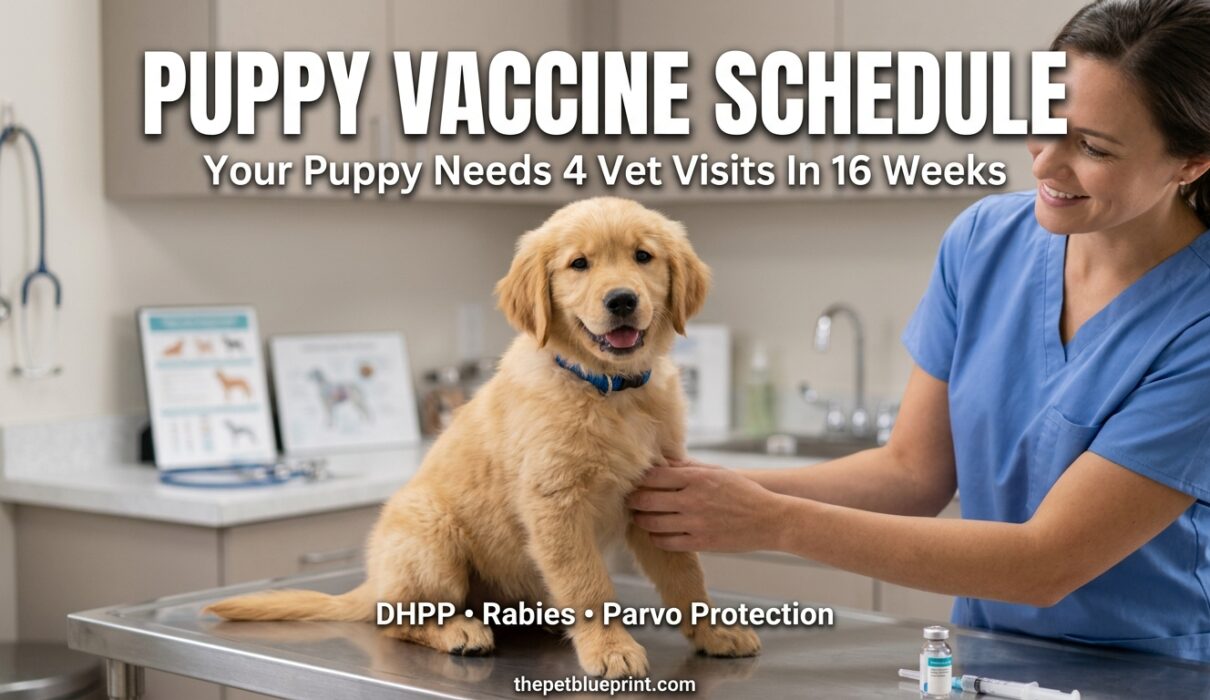
Most puppies need 3–4 vet visits between 6 and 16 weeks of age for their core vaccine series, followed by boosters at 12–16 months. The core shots are DHPP (distemper, hepatitis, parvovirus, parainfluenza) and rabies. Additional vaccines depend on your puppy’s lifestyle and where you live.
A puppy is considered fully vaccinated roughly 1–2 weeks after their final core shot, usually around 16–18 weeks old.
Why puppies need so many shots (the reason actually makes sense)
Puppies are born with temporary protection from antibodies in their mother’s milk, specifically from colostrum, the first milk produced after birth. This maternal immunity is useful for the first few weeks, but it has a problem: those same maternal antibodies also block vaccines from working.
Here’s the issue. Every puppy loses maternal antibody protection at a different rate. Some lose it at 8 weeks, some at 12 weeks, some not until 14–16 weeks. There’s no reliable way to know when any individual puppy hits that window.
So instead of guessing, vets give vaccines in a series. The first shots at 6–8 weeks might get blocked by maternal antibodies. The second round at 10–12 weeks catches more puppies whose maternal immunity has faded. The final round at 14–16 weeks ensures that every puppy, even the ones with longer-lasting maternal protection, builds their own immunity before they’re at significant disease exposure risk.
According to veterinary guidelines, the series is timed to ensure adequate immune response once maternal antibodies decline. It’s not redundancy. It’s a carefully timed safety net.
Core vs. lifestyle vaccines: understanding the difference
Before the schedule, it helps to know what you’re dealing with.
Core vaccines are recommended for every puppy regardless of lifestyle, location, or breed. These protect against diseases that are widespread, highly contagious, and potentially fatal.
Lifestyle vaccines (sometimes called non-core vaccines) are recommended based on where you live, how active your dog is, and what environments they’ll be in. A puppy that will spend weekends hiking through wooded areas needs different protection than one living in a third-floor apartment.
The complete puppy vaccination schedule
6–8 weeks: the first visit
This is often the age puppies leave their breeders or arrive home from rescues. Many will have already received their first round of vaccines before you pick them up, ask for records and bring them to your vet.
Core vaccines given:
- DHPP #1 (distemper, hepatitis, parvovirus, parainfluenza)
Optional lifestyle vaccines:
- Bordetella (kennel cough), recommended if your puppy will attend classes, boarding, or grooming
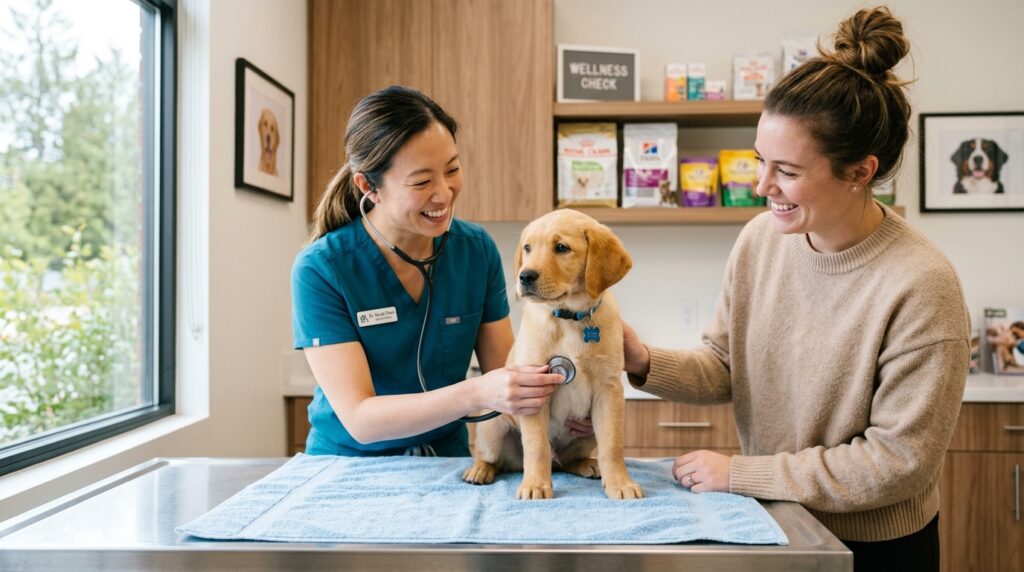
This visit is also your first full wellness exam. Your vet checks for congenital issues, parasites, weight, and overall development. Bring any records you have and your list of questions.
10–12 weeks: building the immune foundation
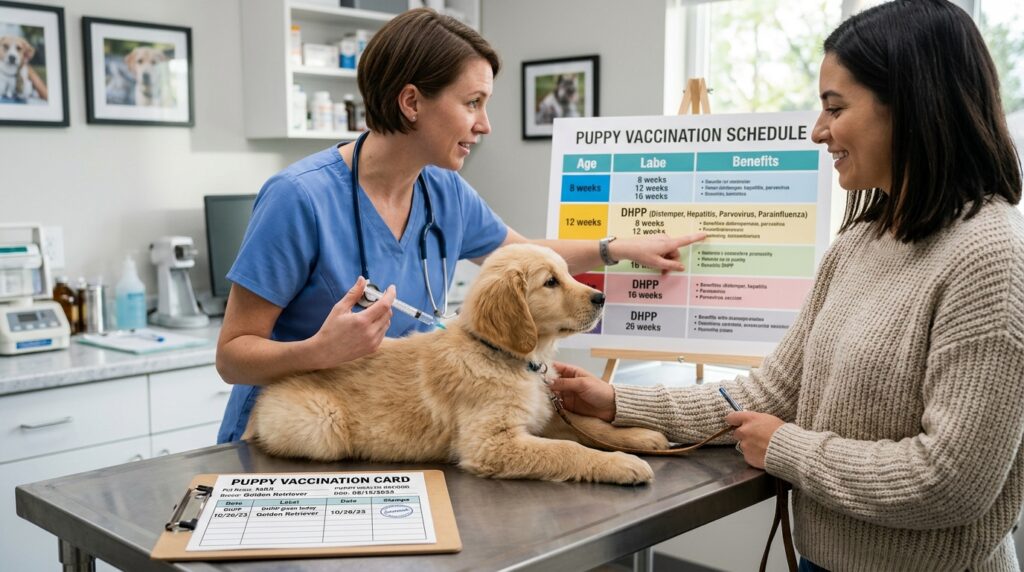
The second round is about reinforcing the immunity that started at the first visit. Maternal antibodies have faded in many puppies by this point, so this shot series is often more effective than the first.
Core vaccines given:
- DHPP #2
Lifestyle vaccines often started:
- Leptospirosis #1, recommended for puppies with outdoor exposure, contact with wildlife, or access to standing water. Leptospirosis is a bacterial disease that causes kidney and liver failure and can also infect humans. (Source: CDC Leptospirosis)
- Lyme disease #1, recommended in tick-endemic regions
- Canine influenza #1, recommended for puppies in high-contact environments (daycare, kennels, dog parks)
14–16 weeks: the most important visit
By this stage, your puppy receives their final core vaccines for the first year: the DHPP final booster and the rabies vaccine, which is required by law in most US states.
Core vaccines given:
- DHPP #3 (final in series)
- Rabies (first dose, legally required in most regions)
Lifestyle vaccines completed:
- Leptospirosis #2 (booster, if started at 10–12 weeks)
- Lyme disease #2 (booster, if started)
- Canine influenza #2 (booster 2–4 weeks after first dose)
This is the visit that makes your puppy fully vaccinated. About 1–2 weeks after this visit, your puppy has built sufficient immunity to safely attend dog parks, grooming appointments, boarding facilities, and puppy classes with vaccinated dogs.
6 months: wellness check, no major vaccines
By 6 months, the core vaccine series is complete. This visit is about preventive care:
- Heartworm prevention, there’s no vaccine for heartworm. It’s prevented with monthly oral or injectable medication. Puppies should start heartworm prevention by 12–16 weeks in most regions. (Source: American Heartworm Society)
- Flea and tick prevention
- Spay or neuter discussion, the recommended timing varies by breed and size. Your vet will advise based on your puppy’s expected adult weight.
- Weight and growth check
12–16 months: first annual boosters
One year after completing their initial series, your puppy needs their first round of boosters.
Vaccines typically due:
- DHPP booster (then moves to every 3 years for most adult dogs)
- Rabies booster (1 year after first dose; then annually or every 3 years depending on local law and vaccine type)
- Leptospirosis annual booster
- Bordetella annual booster (if relevant to lifestyle)
- Lyme annual booster (if applicable)
- Canine influenza annual booster (if applicable)
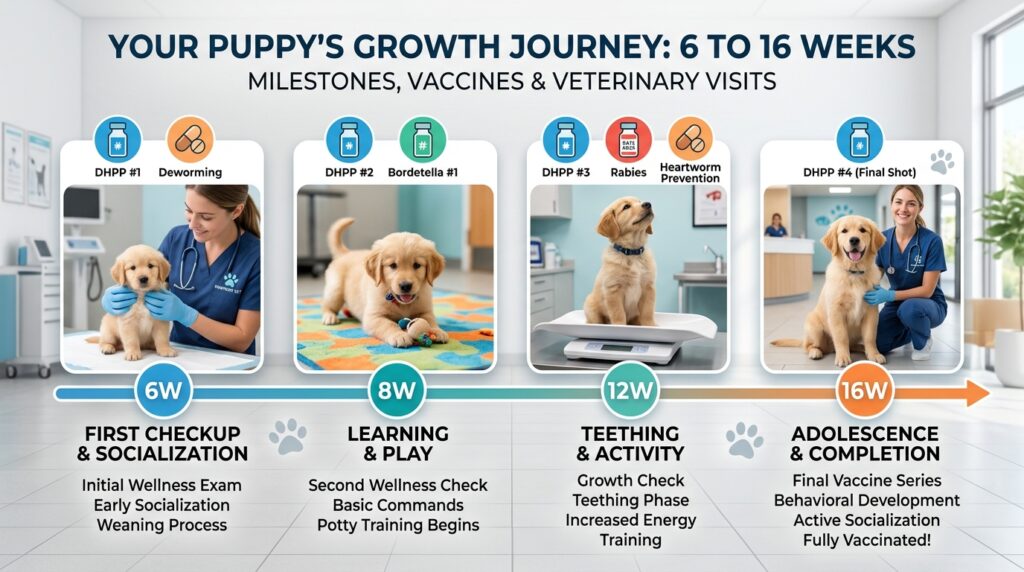
The full puppy vaccine schedule at a glance
| Age | Core vaccines | Optional lifestyle vaccines |
|---|---|---|
| 6–8 weeks | DHPP #1 | Bordetella |
| 10–12 weeks | DHPP #2 | Leptospirosis #1, Lyme #1, Canine influenza #1 |
| 14–16 weeks | DHPP #3, Rabies | Leptospirosis #2, Lyme #2, Canine influenza #2 |
| 6 months | Wellness visit | Heartworm, flea/tick prevention |
| 12–16 months | DHPP booster, Rabies booster | All applicable annual boosters |
Understanding the vaccines: what each one actually protects against
DHPP (also called DAPP, DA2PP, or the 5-in-1 vaccine)
This combination vaccine covers 4 diseases in a single shot.
Distemper: A serious viral disease affecting the respiratory, gastrointestinal, and nervous systems. Highly contagious. Survivors often have lasting neurological damage.
Adenovirus (Hepatitis): Canine adenovirus type 1 causes infectious hepatitis affecting the liver and other organs. Type 2 causes respiratory disease. Both are included in the DHPP vaccine.
Parvovirus: One of the most dangerous puppy diseases. Parvo causes severe vomiting, bloody diarrhoea, and rapid dehydration. It can kill an unvaccinated puppy within 48–72 hours. The virus survives on surfaces for months and is resistant to most disinfectants. Vaccination is the only reliable protection.
Parainfluenza: Contributes to kennel cough. Less severe on its own but spreads easily in groups of dogs.
Some vets use DHLPP or DAL(4)PPV, these are combination formulas that include leptospirosis alongside the standard four. Ask your vet which formulation they use.
Rabies vaccine
Rabies is a fatal viral disease affecting the nervous system. It can be transmitted to humans through the bite of an infected animal. Most states require regular rabies vaccinations by law.
The first rabies vaccine is given at 12–16 weeks. A booster is due 1 year later. After that, your dog may receive it annually or every 3 years depending on your state’s laws and the specific vaccine used.
Bordetella (CIRDC vaccine)
Bordetella bronchiseptica is the primary bacterial cause of kennel cough, a highly contagious respiratory infection causing persistent coughing, gagging, and nasal discharge. Most boarding facilities, groomers, and doggy daycares require proof of this vaccine.
The intranasal version provides protection within 72 hours, which is useful if you need rapid coverage before boarding. Injectable versions take longer to become effective.
Leptospirosis
Leptospirosis is caused by bacteria found in water and soil contaminated by infected wildlife urine. It causes fever, muscle pain, and potentially life-threatening kidney and liver failure. It can infect humans too, making it a public health concern as well as a pet health one.
If a puppy did not receive their leptospirosis booster within 15 months of the first dose, they’ll need to restart the two-dose series. It’s one of the vaccines where missing the booster window has real consequences.
Lyme disease
Recommended for puppies in tick-endemic regions, wooded areas, tall grass, anywhere deer and small mammals are common. Lyme disease causes joint pain, lethargy, fever, and in some cases kidney damage.
If your puppy will spend time outdoors in a high-tick area, the series should be completed before 6 months of age.
Canine influenza
The dog flu spreads quickly in high-contact environments. Outbreaks in doggy daycares and boarding facilities are well documented. The vaccine is recommended for puppies with regular contact with other dogs outside the home.
How many parvo shots does a puppy need?
Parvovirus protection is included in the DHPP vaccine, given in the series of 3 shots between 6 and 16 weeks. A booster follows at 12–16 months, then typically every 3 years in adulthood.
A puppy is not considered protected against parvo until 1–2 weeks after their final DHPP shot in the series, usually around 16–18 weeks. Until that point, avoid high-risk areas like dog parks and pet store floors where exposure risk is elevated.

When can puppies go outside safely?
This is one of the most common questions and the short answer is: limited outdoor exposure is fine before vaccinations are complete, but avoid high-traffic dog areas.
Safe before 16 weeks:
- Your own garden or yard (if you don’t regularly have unvaccinated dogs visiting)
- Walks on clean pavements away from areas where many dogs congregate
- Visits with known, vaccinated, healthy dogs
- Puppy classes that require proof of vaccination from all attendees
Avoid until fully vaccinated:
- Dog parks
- Pet store floors and common areas
- Beaches and parks with high dog traffic
- Grooming salons (unless you know their vaccination requirements)
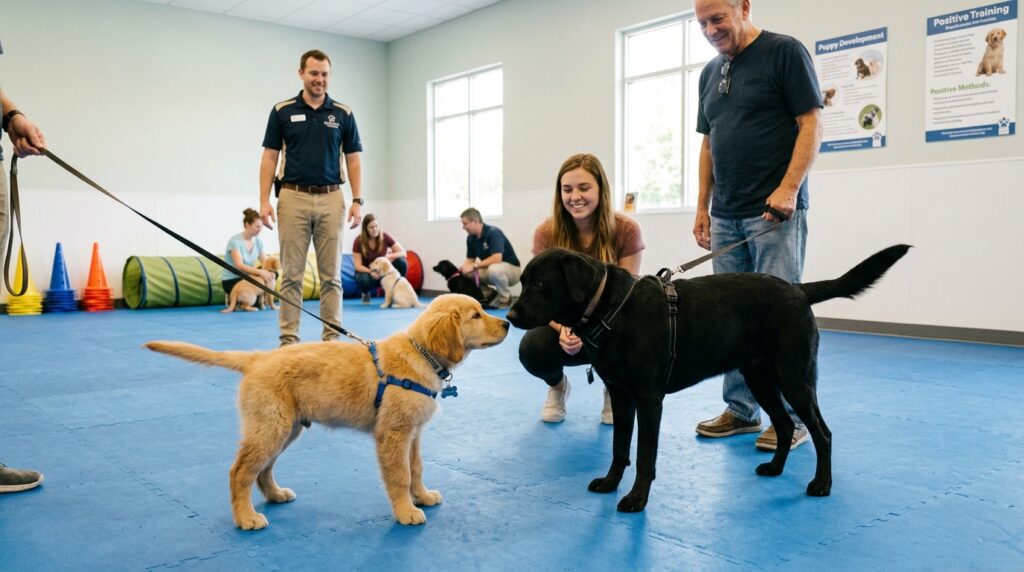
The socialisation window for puppies is 3–12 weeks. This overlaps with the vaccination period, which creates a genuine tension, miss the socialisation window and you risk a fearful adult dog; expose too early and you risk disease. The solution is controlled, lower-risk socialisation, not isolation. If your puppy has anxiety or fear responses later in life, inadequate early socialisation is one of the most common contributing factors.
When should you be worried? Vaccine side effects to watch for
Most puppies handle vaccines well. Mild reactions are normal and temporary.
Normal and expected:
- Lethargy for 12–24 hours after vaccination
- Slight soreness or a small firm lump at the injection site (fades within a few days)
- Mild fever
- Reduced appetite for a day
Call your vet the same day if you see:
- Facial swelling, especially around the muzzle and eyes
- Hives or rash
- Vomiting or diarrhoea
- Difficulty breathing or wheezing
- Collapse or extreme weakness
Severe vaccine reactions are rare but real. They usually happen within 30–60 minutes of the shot, which is why many vets ask you to wait in the clinic briefly after vaccination. If you’re driving home and notice any of the serious signs above, turn around or go to the nearest emergency vet.

What you can do to prepare for each vaccine visit
- Bring all previous vaccine records, especially if you got your puppy from a breeder, rescue, or shelter. Avoid repeating vaccines unnecessarily.
- Write down your questions before you go, it’s easy to forget in the moment. Ask about local disease risks, heartworm prevention, and when your puppy can safely attend dog parks.
- Don’t feed a large meal right before the visit, some puppies feel nauseous after vaccines. A light meal a couple of hours before is fine.
- Bring high-value treats, positive associations with vet visits matter. Puppies that have good vet experiences as babies are generally calmer adult patients.
- Keep your puppy calm and warm after the visit, a quiet afternoon at home after vaccines helps. Avoid intense play or exercise on vaccination days.
What you should avoid
- Don’t skip booster visits assuming the first shot was enough, it wasn’t
- Don’t take your puppy to high-risk dog areas until 1–2 weeks after the final DHPP shot
- Don’t give human pain relief (ibuprofen, paracetamol) for post-vaccine soreness, both are toxic to dogs. If your puppy seems very uncomfortable, call your vet.
- Don’t delay starting heartworm prevention, there’s no catch-up option if a puppy gets heartworm, only treatment
- Don’t assume indoor-only puppies don’t need vaccines, viruses can enter on shoes, clothing, and from other animals
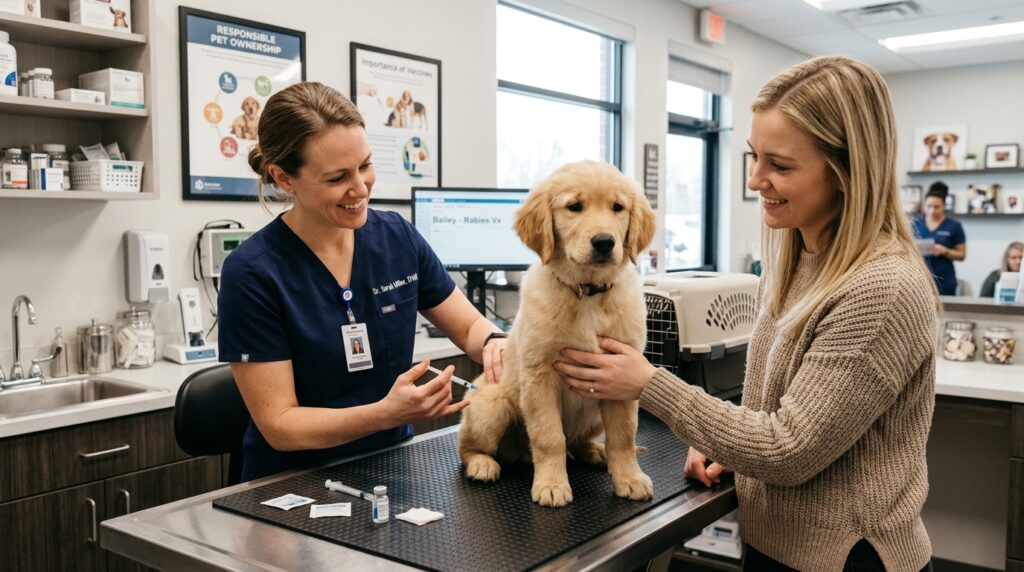
What happens if you miss a vaccine appointment?
Life happens. If a puppy shot gets delayed by a week or two, it’s usually fine, call your vet and reschedule as soon as possible.
If a significant gap occurs (4+ weeks between doses), your vet may need to restart part of the series. The leptospirosis vaccine in particular has a 15-month window for the booster before the series needs restarting. For most core vaccines, your vet can assess where immunity stands and advise on the safest way to get back on track.
When to visit a veterinarian
Beyond the scheduled vaccine visits:
- Book your puppy’s first vet visit within 48–72 hours of bringing them home, before vaccines are due, just for a baseline health check
- Go immediately if you notice severe vaccine reactions (facial swelling, breathing difficulty, collapse)
- Schedule a dedicated conversation about lifestyle vaccines if you’re unsure which your puppy needs, local disease risk varies significantly by region
- If your puppy shows signs of illness between vaccine visits, lethargy, vomiting, diarrhoea, loss of appetite, call your vet rather than waiting for the next scheduled appointment
Real-life scenario
A family brought home a 10-week-old Golden Retriever. The breeder had given the first DHPP shot at 8 weeks and handed over a vaccination certificate. The new owners assumed this meant their puppy was protected and took him to a dog park at 11 weeks.
Three days later, the puppy became severely ill. The diagnosis was parvovirus.
The pup survived after several days of intensive vet care, but the bill was significant and the recovery was difficult. The vet explained that a single DHPP shot provides partial protection at best, especially at 8 weeks, when maternal antibodies may have blocked it. The complete series to 16 weeks, plus the 1–2 week wait after the final shot, is what builds reliable protection.
One shot is the start of the process, not the end of it.
Frequently asked questions
How many puppy shots does a puppy need in total? Most puppies receive 3–4 DHPP shots (at 6–8 weeks, 10–12 weeks, and 14–16 weeks, sometimes with an additional dose depending on the start age), plus one rabies shot, plus any relevant lifestyle vaccines. Total visits in the first year: 3–4 core vaccine visits, plus a 6-month wellness check, plus 12-month boosters.
When do puppies get their first shots? The series starts at 6–8 weeks. If you’re picking up a puppy at 8 weeks, ask the breeder or rescue if any vaccines have already been given and get written records.
What is the 5-in-1 vaccine for puppies? The 5-in-1 vaccine (sometimes called DHLPP or DA2LPP) combines distemper, hepatitis, leptospirosis, parainfluenza, and parvovirus in a single injection. Some vets use this instead of separate DHPP and leptospirosis injections. Ask your vet which formulation they use.
How old should puppies be to get their rabies shot? The rabies vaccine is given at 12–16 weeks at the earliest. Most vets give it at the 14–16 week visit alongside the final DHPP booster. A booster is due 1 year later.
Can puppies have vaccine side effects the next day? Yes. Mild lethargy and reduced appetite on the day of vaccination and the following day are normal. Anything beyond mild tiredness, especially facial swelling, vomiting, or breathing changes, warrants a same-day call to your vet.
Read more on thepetblueprint.com
- Dog anxiety: why your dog is scared and what actually helps, early socialisation during the puppy period directly affects anxiety levels in adult dogs
- German Shepherd lifespan, types, and everything first-time owners need to know, breed-specific health considerations including vaccination timing for large breeds
- What’s really inside your dog’s food: how to read a pet food label, nutrition matters as much as vaccination for a healthy first year
The short version
Your puppy needs 3 core vaccine visits between 6 and 16 weeks: DHPP at 6–8, 10–12, and 14–16 weeks, with rabies at the final visit. Lifestyle vaccines (leptospirosis, Lyme, Bordetella, canine influenza) depend on where you live and how your dog will spend their time.
Don’t take your puppy to dog parks until 1–2 weeks after the final DHPP shot at 16 weeks.
Missing a visit doesn’t ruin everything, but reschedule quickly and tell your vet about the gap. They’ll advise on the safest path forward.
The schedule exists because it works. The puppies that get through it fully protected are the ones that go on to long, healthy lives.
Sources:
- American Animal Hospital Association (AAHA) Vaccination Guidelines — aaha.org
- American Veterinary Medical Association (AVMA) — avma.org
- American Heartworm Society — heartwormsociety.org
- CDC Leptospirosis Information — cdc.gov
- AKC Puppy Vaccination Guide — akc.org
- Merck Veterinary Manual — merckvetmanual.com