


 By
By Disclaimer: This content is for informational purposes only and does not replace professional veterinary advice. Always consult a licensed veterinarian before introducing new foods to your dog’s diet, especially if your dog has diabetes, dental disease, or is on medication.
Table of Contents
You’re cutting a pineapple. Your dog has appeared from nowhere.
They always know. You didn’t say anything. You barely moved. And yet there they are, sitting 10 centimetres from your foot with an expression that says “I have never eaten in my entire life and I am going to die if you don’t share that.”
So: can dogs eat pineapple?
Yes. And it’s actually one of the more nutritious fruit treats you can offer. But there are a couple of things most people get wrong, specifically around the core, the canned version, and that viral claim about pineapple stopping dogs from eating poop (we’ll get to that).
Quick answer: is pineapple safe for dogs?
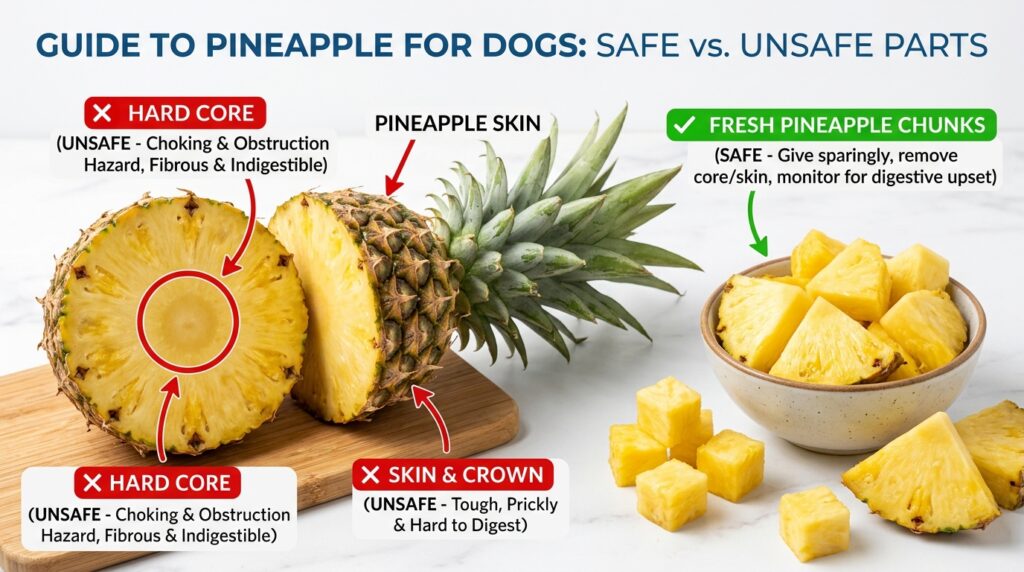
Yes. Raw, fresh pineapple flesh served in appropriate portions is safe for dogs and genuinely nutritious. It’s high in water content, vitamin C, B vitamins, fibre, and an enzyme called bromelain that supports digestion.
What’s not safe: the skin, the core, canned pineapple in syrup, and pineapple juice with added sweeteners. Fresh flesh only, in moderation.
What pineapple actually does for dogs (the real science)
Bromelain: pineapple’s most useful compound
Bromelain is a proteolytic enzyme found primarily in pineapple. It breaks down proteins, which aids digestion and reduces inflammation. In humans, bromelain is used clinically for its anti-inflammatory properties. In dogs, it helps the digestive system process protein more efficiently.
It’s also why fresh pineapple tenderises meat (and why it shouldn’t sit too long in a marinade). In your dog’s gut, it does something similar: helps break things down more cleanly. (Source: National Institutes of Health, Bromelain)
Vitamin C
Dogs produce their own vitamin C, unlike humans. So it’s not a deficiency they need supplementing. But additional dietary vitamin C has antioxidant effects that help reduce cellular damage, support immune function, and reduce inflammation. For dogs under stress, recovering from illness, or very active dogs, extra vitamin C from a natural source like pineapple is genuinely useful.
B vitamins
Pineapple contains thiamin (B1), riboflavin (B2), niacin (B3), B6, and folate. These support brain function, energy metabolism, red blood cell production, and immune health. B vitamins are particularly important in growing puppies.
Hydration
Fresh pineapple is 82 to 86% water. On a hot day, or after a long walk, a few frozen pineapple chunks is a genuinely good way to get extra hydration into a dog who might not be drinking as much as they should. It tastes interesting to them, it has real nutritional value, and they love it. That’s a good treat.
Manganese and other minerals
Pineapple contains manganese, potassium, copper, magnesium, and small amounts of calcium, phosphorus, and zinc. Manganese specifically supports bone development, ligament health, and energy production. Not every fruit treat delivers this range of micronutrients. Pineapple is legitimately one of the more nutritious options. (Source: USDA FoodData Central)

How much pineapple can dogs eat?
The 10% treat rule applies. Treats of all kinds should stay under 10% of your dog’s daily calorie intake. About 1 cup of fresh pineapple chunks contains roughly 80 calories, which is a lot for a small dog.
Here’s a practical serving guide by size:
| Dog size | Serving size |
|---|---|
| Extra small (2 to 20 lbs) | 1 to 2 small pieces |
| Small (21 to 30 lbs) | 2 to 3 pieces |
| Medium (31 to 50 lbs) | 5 to 6 pieces |
| Large (51 to 90 lbs) | A small handful |
| Extra large (90+ lbs) | A slightly bigger handful |
Start with less than this if your dog has never had pineapple before. New foods introduced too quickly cause digestive upset regardless of what the food is.
Types of pineapple: what’s fine, what’s not, what’s complicated
Fresh pineapple: yes
This is the only form you should be serving regularly. Remove the skin and core, cut into bite-sized pieces, and serve. Simple.
Frozen pineapple: yes
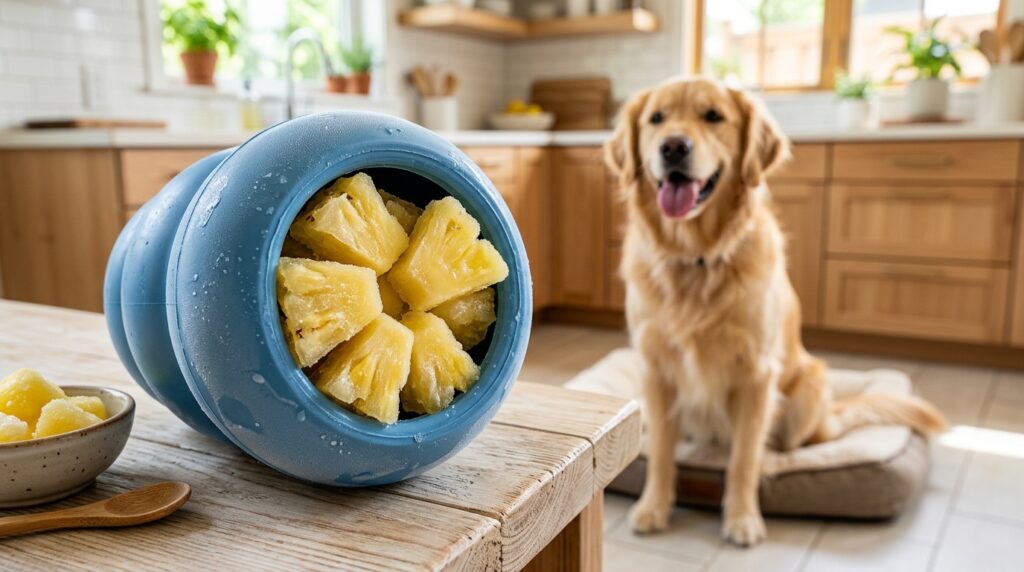
Nutritionally identical to fresh. Freezing doesn’t degrade the vitamins or bromelain meaningfully. Frozen pineapple chunks are genuinely excellent on hot days: crunchy, cold, and hydrating. Most dogs love the texture. Keep a bag in the freezer and you’ve always got a quick healthy treat ready.
Canned pineapple: no
Canned pineapple almost always comes packed in syrup. That syrup is high in added sugar, which causes digestive upset and contributes to obesity, dental disease, and blood sugar instability in dogs. Even “juice-packed” canned pineapple contains more sugar than fresh. Stick to fresh or frozen.
Pineapple juice: only if plain, and rarely
Pure pineapple juice with no added sweeteners or preservatives is safe in very small amounts. But the juice concentrates the sugar significantly. All the sugar from the fruit, none of the fibre to slow its absorption. For most dogs, a few drops as a food topper is fine occasionally. A full serving of juice is not.
Check the label for xylitol. Some flavoured juices use it as a sweetener. Xylitol is severely toxic to dogs. If xylitol is present in any quantity, it’s a hard no.
Dried pineapple: ideally no
Store-bought dried pineapple almost always has added sugar and preservatives. It’s also calorie-dense because the water content is removed while the sugar remains. If you want to give dried pineapple, dehydrate it yourself at home with no additives, and give a smaller portion than you would fresh.
Is pineapple bad for dogs in any situation?
For most healthy adult dogs, no. But a few specific situations need more caution.
Dogs with diabetes: The natural sugar in pineapple affects blood glucose. Even fresh pineapple should only be given to diabetic dogs with explicit vet guidance and careful monitoring.
Dogs on medication: Bromelain can affect how some medications are absorbed. If your dog takes regular medication, ask your vet before adding pineapple to their diet. This is a genuine interaction, not just a disclaimer.
Dogs with acid reflux or sensitive stomachs: Pineapple is acidic. For dogs that already struggle with gastrointestinal issues, the acidity can trigger or worsen symptoms. Start with a tiny amount and monitor.
Dental disease: Pineapple’s natural sugar contributes to plaque buildup over time if dental hygiene is already poor. If your dog’s teeth aren’t regularly brushed, add this to your consideration.
The poop-eating question: does pineapple stop coprophagia?
This is one of the most searched questions about pineapple and dogs. The theory is that bromelain in pineapple makes stool taste unpleasant, discouraging the dog from eating it.
The honest answer: there is no solid scientific evidence that pineapple reliably stops dogs from eating faeces. Anecdotally, some owners report success. Controlled studies don’t back it up.
Coprophagia (the scientific term for poop eating) has several causes: dietary deficiency, boredom, attention-seeking, learned behaviour, or simply the fact that some dogs find it interesting and the habit has never been discouraged. Addressing the root cause is more effective than any food-based deterrent.
If your dog is eating faeces regularly, it’s worth a vet conversation to rule out nutritional deficiency or a digestive absorption issue before reaching for the pineapple. (Source: AKC Coprophagia)
When should you be worried?
Signs your dog has eaten too much pineapple or reacted badly to it:
- Diarrhoea within a few hours of eating it
- Vomiting
- Excessive gassiness or bloating
- Lethargy or apparent abdominal discomfort
- Difficulty going to the toilet
These usually resolve within 24 hours. If they don’t, or if your dog seems in significant distress, call your vet.
One specific emergency to know: if your dog ate the core or skin of a pineapple, watch for signs of obstruction. The core is tough and fibrous. In small dogs, it can cause a genuine intestinal blockage. Signs include repeated vomiting, no interest in food, and apparent abdominal pain. That’s a vet visit, not a wait-and-see situation.
How to safely give your dog pineapple
Step 1: Buy fresh pineapple. Not canned, not juiced.
Step 2: Remove all skin and leaves. The skin is spiny and tough. Even large dogs shouldn’t eat it.
Step 3: Cut out the core. It’s too hard and fibrous for safe chewing.
Step 4: Cut the flesh into bite-sized pieces appropriate for your dog’s size. A piece that’s fine for a Labrador is a choking hazard for a Chihuahua.
Step 5: Give a small amount first if they’ve never had it before. Wait 30 minutes and see how they respond before giving more.
Fun serving ideas:
- Frozen chunks in a Kong or ice cube tray for a summer enrichment treat
- Mashed and mixed into their regular food as a food topper
- Blended with plain yogurt (xylitol-free, low sugar) and frozen in a silicone mould for a dog-safe frozen treat
- Used as a training reward for medium and large dogs who respond well to food variety
What you should avoid
- Don’t give the skin or core. Ever. To any size dog.
- Don’t serve canned pineapple, including “juice-packed” versions
- Don’t give pineapple juice as a regular drink. A drop as a topper occasionally is fine. A bowl of it is not.
- Don’t assume “natural” means unlimited. Pineapple is nutritious but it has real sugar content. Portions matter.
- Don’t give pineapple to a diabetic dog without asking your vet first
- Don’t check labels on pineapple products just once. Formulations change. Always read before giving your dog anything new from a packet.
When to visit a veterinarian
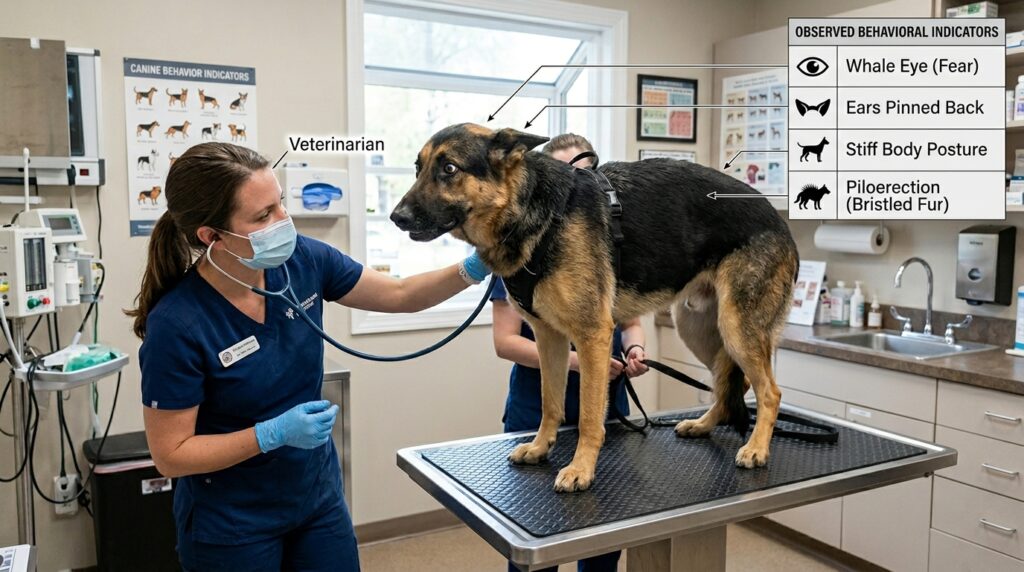
Book a vet appointment or call if:
- Your dog ate pineapple core or skin and is showing signs of obstruction (vomiting, abdominal pain, no appetite)
- Digestive symptoms don’t resolve within 24 hours
- Your dog has diabetes and you want to add pineapple to their diet
- Your dog is on regular medication and you want to check for bromelain interactions
- You’re dealing with coprophagia and want to address the root cause properly
Real-life scenario
A Golden Retriever owner started giving her dog a few chunks of fresh pineapple as a training treat during summer sessions. Her dog was 35 lbs, healthy, and mad for the stuff.
After about 10 days, she noticed loose stools in the mornings. Not dramatically loose, but softer than usual. She hadn’t changed anything else in the diet.
She mentioned it to her vet at a routine visit. The vet asked how much pineapple she was giving. The answer: roughly 8 to 10 pieces daily, because “she loves it so much.”
The fix was simple: back to 5 to 6 pieces every other day rather than daily. Digestion normalised within a week.
The fruit was fine. The quantity wasn’t. Pineapple is a treat, not a meal component, and even good treats need portion control.
Frequently asked questions
Can puppies eat pineapple? Yes, in very small amounts. A puppy’s digestive system is more sensitive than an adult dog’s, so start with one small piece and wait to see how they respond before offering more. The sugar content also means it should be a rare treat rather than a regular one for dogs still developing.
Can dogs have pineapple juice? Only if it’s 100% pure pineapple juice with no added sugar, sweeteners, or preservatives. Check for xylitol specifically. A small amount as a food topper is fine occasionally. A full serving is too much sugar for most dogs.
Is pineapple good for dogs with digestive issues? Bromelain can help with protein digestion, so for dogs with mild digestive sensitivity it may be beneficial. But pineapple is also acidic and high in fibre, which can irritate sensitive stomachs. For dogs with diagnosed gastrointestinal conditions, ask your vet before adding it to the diet.
How much pineapple to give a dog to stop eating poop? There’s no evidence-based amount because there’s no solid evidence pineapple reliably stops coprophagia. If your dog is eating faeces regularly, the more useful step is a vet visit to find the underlying cause.
Are pineapples good for dogs with arthritis or joint pain? Bromelain has documented anti-inflammatory properties, and pineapple’s vitamin C contributes to collagen formation that supports joint tissue. These are supplementary benefits, not treatments. Don’t replace prescribed joint medication or supplements with pineapple. But adding a few pieces a few times a week to a dog already on a joint support plan is a reasonable, low-risk addition.
Read more on thepetblueprint.com
- Can dogs eat blueberries?: another fruit with real research behind its benefits, and just as easy to serve
- Can dogs eat bananas?: the portion guide there applies similarly to pineapple for small and large dogs
- What’s really inside your dog’s food: how to read a pet food label: understanding your dog’s base nutrition makes treat decisions easier
The short version
Fresh pineapple is one of the genuinely useful fruit treats you can give a dog. Real vitamins, real hydration, real digestive benefits from bromelain. Serve it fresh, remove the skin and core, cut it appropriately for your dog’s size, and keep portions within the 10% treat guideline.
Skip canned. Skip the core. Check any juice for xylitol.
And if your dog’s main reason for wanting pineapple is that you’re eating some? That’s just them being a dog. Share a couple of pieces. They’ve earned it.
Sources:
- National Institutes of Health, Bromelain research: ncbi.nlm.nih.gov
- USDA FoodData Central: fdc.nal.usda.gov
- American Kennel Club: akc.org
- ASPCA Animal Poison Control: aspca.org
- American Veterinary Medical Association: avma.org