

 By
By Disclaimer: This content is for informational purposes only and does not replace professional veterinary advice. Always consult a licensed veterinarian for your Chihuahua’s health, nutrition, and care needs.
Table of Contents
Small body. Giant personality. Zero awareness of either.
If you’ve ever watched a 5-pound Chihuahua square up to a Labrador without a moment’s hesitation, you understand the breed completely. These dogs did not get the memo about their size. They operate with the confidence of a much larger animal, the loyalty of a shadow, and the stubbornness of someone who has been right about everything their entire life.
The long haired Chihuahua takes all of that and wraps it in a silky, flowing coat that makes them look like a tiny aristocrat with opinions.
If you’re considering bringing one home, or you already have one and you’re frantically searching “why does my Chihuahua do that,” this guide covers everything. How long they live, what they actually die from, how to keep them healthy, and why your 4-pound dog genuinely believes they’re in charge.
Quick answer: what is a long haired Chihuahua?
A long haired Chihuahua is the same breed as a short haired Chihuahua. Same temperament, same health profile, same enormous personality in a tiny frame. The coat length is simply a genetic variation.
The AKC recognises both coat types as one breed: the Chihuahua. They come in two head shapes (apple and deer), a vast range of colours, and apparently unlimited confidence.
How long do Chihuahuas live? (The answer will surprise you)
Chihuahuas are, genuinely, one of the longest-living dog breeds in the world.
The average Chihuahua lifespan is 14 to 16 years. Well-cared-for Chihuahuas regularly reach 18 to 20 years. The oldest non-crossbred Chihuahua on record is Megabyte, who lived to 20 years and 265 days old.
And then there’s Spike. A Chihuahua named Spike was named the world’s oldest living dog by Guinness World Records at 23 years and 7 days old. Spike lives with his owner Rita Kimball on a farm in Camden, Ohio, where despite his advanced age he reportedly leads an active life visiting barn cats, cows, and horses daily. By December 2024, Spike had turned 25 years old.
So when you ask “how long can a Chihuahua live?” The honest answer is: longer than most dogs you’ll ever own.
The longevity of Chihuahuas is partly genetic, partly the small dog advantage (smaller dogs age more slowly than larger breeds), and partly down to the care they receive. More on that below.
Chihuahua at a glance
| Official name | Chihuahua (long coat or smooth coat) |
| Size | Toy |
| Weight | Under 6 lbs (AKC standard) |
| Height | 5 to 8 inches |
| Chihuahua lifespan | 14 to 16 years average; 20+ years possible |
| Coat types | Long hair (flowing, soft) and short hair (smooth, close) |
| Head types | Apple head and deer head |
| Energy level | High |
| Exercise needed | 20 to 30 minutes daily |
| Good with kids | Older children only; fragile with young ones |
| Separation anxiety | High |
| Trainability | Smart but stubborn |
| First-time owner friendly | Yes, with patience and consistency |
Types of Chihuahua: what’s actually different
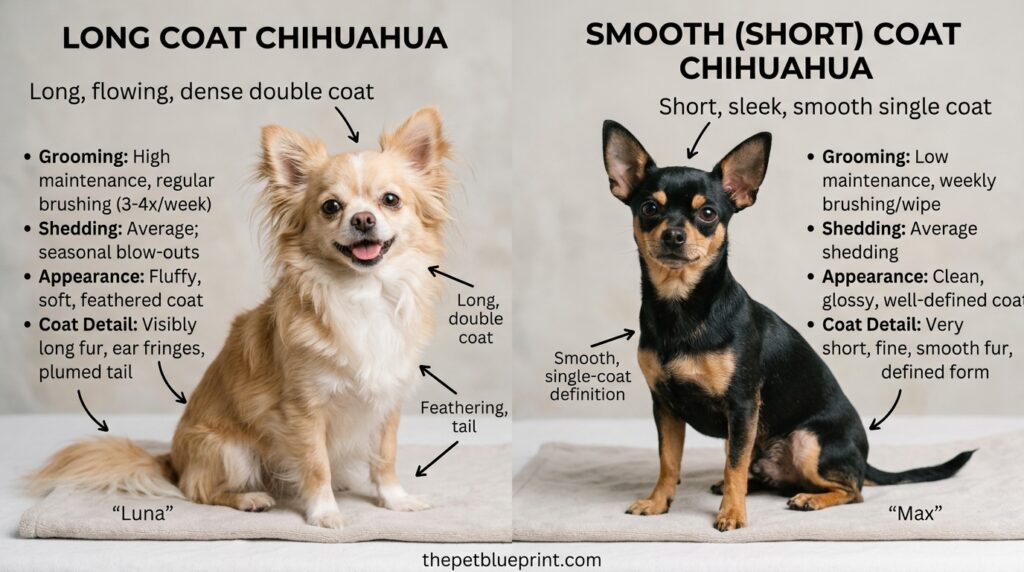
Long hair Chihuahua vs short hair Chihuahua
The long haired version has a soft, flowing coat with feathering on the ears, chest, legs, and tail. The short hair Chihuahua (smooth coat) has a close, smooth coat that requires less grooming effort.
Interestingly, two short-haired Chihuahua parents can produce a long-haired puppy if both carry the recessive long-coat gene. And a long-haired parent doesn’t guarantee long-haired puppies. Coat type in Chihuahuas follows a simple recessive inheritance pattern that keeps breeders on their toes.
Apple head vs deer head Chihuahua
The AKC breed standard describes the apple head as the official type. Apple head Chihuahuas have a rounded, dome-shaped skull, a shorter muzzle, and often have slightly bulging eyes. They may also have a soft spot on their skull (called a molera) similar to a fontanelle in newborn humans.
Deer head Chihuahuas have a longer, more tapered face and muzzle, larger ears, and a slightly longer neck. They tend to have fewer breathing and eye issues than apple heads. They can also be slightly larger.
If dog shows interest you, you want an apple head. If health simplicity matters more, deer heads generally have fewer structural concerns.
White Chihuahua, black Chihuahua, and other colours
Chihuahuas come in more colour combinations than almost any other breed. Solid white, solid black, chocolate, fawn, cream, red, silver, blue, and virtually every bicolour and tricolour combination exists. Colour doesn’t affect temperament or health in Chihuahuas.
Miniature Chihuahua and teacup Chihuahua
These terms are not official breed categories. They’re marketing language. Chihuahuas are already the world’s smallest dog breed. A “miniature” or “teacup” Chihuahua is simply an undersized Chihuahua, often bred from the smallest individuals in a litter, which increases the risk of severe health problems including hypoglycaemia, heart defects, and bone fragility.
The AKC’s own guidance is direct: do not buy from anyone advertising teacup Chihuahuas. The practice prioritises size over health, and the resulting dogs often suffer significantly.
Big Chihuahua
On the other end, “big Chihuahua” or “deer head Chihuahua” dogs sometimes exceed the breed standard of 6 lbs. These dogs are perfectly healthy and often hardier than the smallest individuals. They’re just not eligible for conformation showing.
Where do Chihuahuas come from? (Older than you think)
Descendants of the Techichi, a small breed that shares many characteristics with the modern Chihuahua, these dogs held great importance in ancient Mayan, Toltec, and Aztec cultures. It is believed they were bred as holy animals, and that how people treated them would directly impact their experience in the afterlife.
The modern Chihuahua’s name comes from the Mexican state where the first specimens were found by Americans in the mid-1800s. The AKC officially recognised the breed in 1904, and they haven’t looked back since.
What were Chihuahua dogs bred for? Historically, companionship and spiritual significance. Some historical accounts also suggest vermin control. In modern times: being carried in handbags and judging you from the sofa.

Chihuahua temperament: what you’re actually getting
Let’s be clear about what “feisty” means in practice.
A Chihuahua that has been well-socialised and consistently trained is one of the most affectionate, entertaining, and devoted companions you’ll find in any breed. They bond deeply, follow their person everywhere (sometimes literally sitting on their feet), and have a genuinely playful sense of humour.
An unsocialised Chihuahua is a different story. Without proper training from puppyhood, they can become possessive, anxious, vocal, and prone to snapping at strangers, children, and other dogs. This isn’t aggression in the dangerous sense. It’s anxiety expressing itself in the only way the dog knows how.
The “angry Chihuahua” meme exists for a reason. Most people who share them have accidentally created the behaviour through inconsistent boundaries and over-accommodation. A Chihuahua that’s carried everywhere, never asked to walk beside you on a lead, and protected from every social interaction, learns that the world is threatening and they need to defend themselves from it.
What Chihuahuas genuinely need temperamentally:
- Consistent boundaries from day one (they respect structure more than most people expect)
- Socialisation from 8 weeks onward: new people, new sounds, new environments
- Not to be carried everywhere when they could safely walk
- An owner who doesn’t find the snapping “cute” when it’s directed at strangers
Do those things and you get the good version. Skip them and the funny Chihuahua videos start making more sense.
How much exercise does a Chihuahua need?
Less than most dogs but more than people assume for such a small animal.
20 to 30 minutes of exercise daily keeps a Chihuahua in good physical and mental health. Two 10 to 15 minute walks work well for most. They can also get a lot of exercise indoors through play sessions, which makes them genuinely suitable for apartment living.
Two important exercise notes:
Always use a harness, never a collar with a lead attached. Chihuahuas are prone to tracheal collapse, a condition where the cartilage that keeps the airway open weakens and the windpipe collapses. A collar creates pressure on the throat that can trigger this. A harness distributes pressure across the chest and eliminates the risk entirely.
Don’t over-exercise in hot weather. Small dogs regulate body temperature less efficiently than large ones. Short, cooler-temperature walks in summer are safer than long midday outings.
Do Chihuahuas moult? Yes. Both coat types shed moderately year-round with heavier shedding in spring and autumn. Long haired Chihuahuas shed in small clumps rather than individual hairs, which some owners find easier to manage. Either way, a lint roller becomes a lifestyle accessory.

When should you be worried? Health issues in Chihuahuas
Chihuahuas are generally healthy for their long lives, but several conditions appear more in this breed than others.
Dental disease (the most common issue)
Chihuahuas have small mouths packed with the same number of teeth as larger dogs. This overcrowding leads to tartar buildup, gum disease, and retained baby teeth. Dental disease in Chihuahuas is extremely common and directly affects lifespan, because untreated dental infection spreads to the heart and kidneys.
Brush their teeth daily. This sounds like a lot, but it’s genuinely the most impactful health habit you can build for a Chihuahua. If daily brushing isn’t happening, dental chews and professional cleanings at least annually are essential. (Source: AKC Dental Health)
Hypoglycaemia (low blood sugar)
Small dogs have small muscles and limited glycogen stores, which means their blood sugar drops faster than larger breeds when they miss a meal. In puppies and very small adults, hypoglycaemia can be a genuine emergency.
Signs include lethargy, weakness, trembling, and in severe cases, seizures. Feed small, frequent meals (3 to 4 times daily for puppies), keep a glucose supplement like Nutri-Cal on hand, and call your vet immediately if your Chihuahua becomes unresponsive or has a seizure.
Patellar luxation (slipping kneecap)
The kneecap slips out of its groove during movement, causing the dog to skip on one leg intermittently. Mild cases often resolve on their own. Severe cases need surgical correction. Weight management and avoiding excessive jumping significantly reduce progression. (Source: Merck Veterinary Manual)
Collapsing trachea
As mentioned above. The airway weakens and partially collapses, producing a distinctive honking cough. Mild cases are managed with weight control, avoiding irritants (smoke, aerosols), and harness use. Severe cases may need surgery. This is a progressive condition that worsens with age.
Heart disease
Congestive heart failure is the leading cause of death in older Chihuahuas, most often related to chronic degenerative mitral valve disease. This condition weakens the valve on the left side of the heart, causing blood to leak backward, eventually leading to heart enlargement and heart failure.
Annual vet checks become especially important from age 5 onward. Your vet will listen for a heart murmur, which is often the first sign of underlying cardiac disease.
Hydrocephalus
Fluid accumulation in the brain, more common in apple head Chihuahuas with very domed skulls. Signs include seizures, confusion, and a characteristic “drunken” gait. Reputable breeders screen for this. If you notice any neurological symptoms in a young Chihuahua, see a vet the same day.
Eye conditions
Those large, expressive eyes are one of the Chihuahua’s most distinctive features. They’re also prone to dry eye, glaucoma, and cataracts. Wipe eye discharge with a damp cloth weekly. Any redness, cloudiness, or apparent pain (pawing at the eye) needs a vet visit promptly.
What do Chihuahuas usually die from?
Honestly, this is one of the most searched questions about the breed, and it deserves a straight answer.
The most common causes of death in Chihuahuas are heart disease (particularly mitral valve disease in older dogs), infections, and trauma. That last one is important: small dogs are genuinely fragile. Falls from furniture, being stepped on, rough handling by children, and encounters with larger dogs are significant risks for this breed.
Hypoglycaemia is the most common life-threatening emergency in young Chihuahuas and very small adults.
After the age of 10, heart disease and cancer become the primary concerns, which is why annual vet visits with cardiac monitoring matter so much in older dogs.
Grooming a long haired Chihuahua
The long coat is beautiful and lower-maintenance than it looks, but it does need attention.
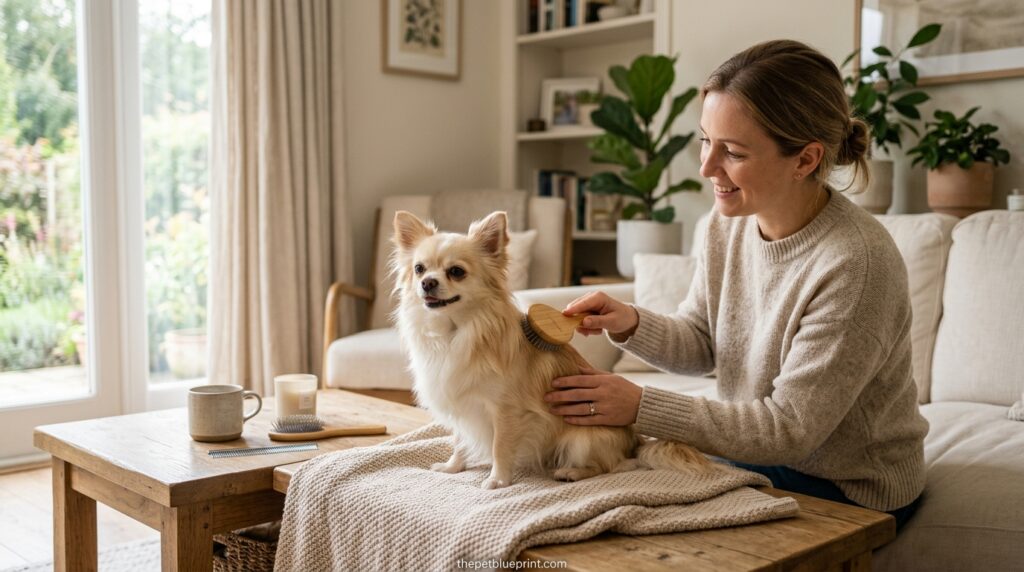
Brushing: 2 to 3 times a week minimum. Focus on the areas most prone to matting: behind the ears, under the “armpits,” and around the collar area. A pin brush or a fine-toothed comb works well.
Bathing: Once or twice a month, or when they’ve rolled in something they shouldn’t have. Brush thoroughly before bathing or the water will tighten existing mats significantly.
Eyes: Wipe weekly with a damp cloth to remove discharge. Long-haired Chihuahuas sometimes need professional trimming of the hair around the eyes to prevent irritation.
Ears: Chihuahuas have upright, open ears that allow airflow, which means they’re naturally less prone to ear infections than floppy-eared breeds. A quick weekly visual check is usually enough.
Teeth: Daily brushing. Non-negotiable for this breed given how prone they are to dental disease.
Nails: Monthly trim. They click on hard floors when overgrown, which affects gait.
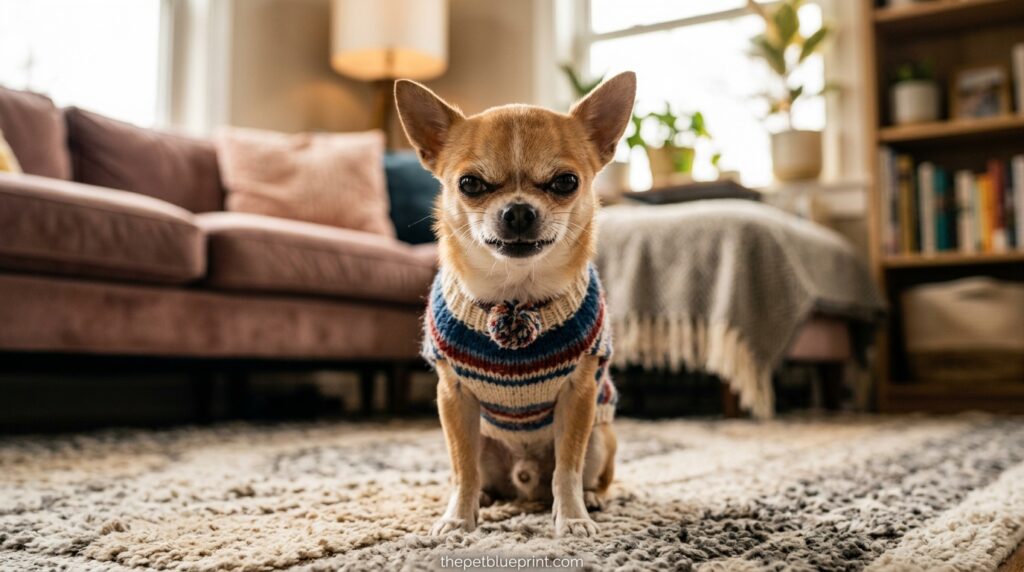
Cold weather note: Chihuahuas genuinely feel the cold. Their small body mass means they lose heat quickly. A dog jumper or coat in winter isn’t a fashion statement. It’s practical, and most Chihuahuas actually enjoy wearing one.
Feeding a Chihuahua: more important than you think
Choose a food specifically formulated for small breeds or toy breeds. These formulas have smaller kibble sizes for easier chewing, and higher calorie density per gram (because small dogs eat small portions but have relatively high energy needs).
Puppies: 3 to 4 meals daily to prevent hypoglycaemia. This is particularly important under 6 months old.
Adults: 2 meals daily. Measure portions. Chihuahuas gain weight easily and the excess is hard to see under a fluffy coat. Even half a pound of extra weight on a 5-pound dog is 10% of their body mass. That’s significant.
Dry kibble is recommended for this breed because the abrasive texture helps reduce plaque buildup on teeth. A fully wet food diet without dental supplementation accelerates the dental disease they’re already prone to.
Watch treats carefully. A single training treat that’s perfectly sized for a Labrador can represent 20% of a Chihuahua’s daily calorie allowance. Use kibble pieces from their daily portion as training rewards.
What you can do to set your Chihuahua up for a long, healthy life
- Start training and socialisation on day one. Seriously. The friendly, confident Chihuahua everyone wants is built in the first 6 months.
- Switch to a harness immediately. Collars are for ID tags only with this breed.
- Brush their teeth every day. Set a reminder if you need to. This single habit has more impact on their lifespan than almost anything else.
- Feed measured portions. Never free-feed.
- Annual vet checks from year one, twice yearly from age 7. Chihuahuas live long enough that things change slowly and catching them early matters.
- Protect them from falls. Ramps for beds and sofas. No jumping from height.
- Keep them warm in cold weather. A thin coat or a lack of body fat means they’re genuinely uncomfortable in cold conditions.
What you should avoid
- Don’t let children carry or play with a Chihuahua unsupervised. These dogs can be seriously injured by rough handling from kids who don’t know better.
- Don’t use a collar and lead. Harness only.
- Don’t let the small dog syndrome behaviours slide because “it’s cute.” Snapping and growling from any dog should be addressed, not laughed at.
- Don’t buy from anyone advertising “teacup,” “miniature,” or “micro” Chihuahuas. These are not real breed categories and the dogs produced often suffer for it.
- Don’t skip dental care. The consequences show up years later and they’re serious.
- Don’t leave a Chihuahua alone for very long stretches regularly. Separation anxiety is genuinely common in this breed.

When to visit a veterinarian
See a vet promptly if your Chihuahua shows:
- Trembling, weakness, or lethargy (possible hypoglycaemia, especially in puppies)
- A honking or goose-like cough (possible tracheal collapse)
- Skipping or holding up a back leg intermittently (possible patellar luxation)
- Eye redness, discharge, cloudiness, or obvious discomfort
- Seizures or confused, disoriented behaviour (possible hydrocephalus or hypoglycaemia)
- Coughing during exercise or reduced tolerance for activity (possible heart disease)
Annual dental checks and cleanings are essential for this breed regardless of whether you see visible symptoms.
Real-life scenario
A first-time Chihuahua owner brought home an 8-week-old long haired puppy. She was incredibly tiny, absolutely adorable, and immediately started growling at the owner’s adult nephew when he came to visit.
The owner found it funny. “She’s so small, what harm can she do?” became the household response.
By 6 months, the Chihuahua was snapping at strangers, barking at the window for 20 minutes every time a dog walked past, and had bitten a friend who tried to pet her without introducing himself properly.
A certified trainer assessed the situation: anxiety-based reactivity, reinforced by the owner laughing at early warning signals and never requiring the dog to meet new people calmly.
Three months of consistent positive reinforcement training, structured greetings, and leash work produced a dog that was still a Chihuahua (still opinionated, still alert), but manageable, friendly, and genuinely enjoyable to be around.
The dog hadn’t changed. The owner’s response to the behaviour had.
Frequently asked questions
How long do Chihuahuas live? The average is 14 to 16 years. Many well-cared-for Chihuahuas have been known to reach 20 years or more. Spike the Chihuahua, the world’s oldest living dog, celebrated his 25th birthday in December 2024.
Do Chihuahuas moult? Yes. Both long and short coat varieties shed moderately year-round. Long haired Chihuahuas tend to shed in small clumps. Regular brushing keeps it manageable.
What is a reindeer Chihuahua? This is an informal term sometimes used to describe deer head Chihuahuas with longer legs and a more slender build. It’s not an official classification. A deer head Chihuahua by another name.
Why does my Chihuahua shake? Several reasons. Cold is the most common (they genuinely lose heat quickly). Excitement and anxiety also cause trembling. But shaking can also signal hypoglycaemia or pain. If the shaking is new, persistent, or accompanied by other symptoms, see your vet.
Is a hairless Chihuahua a real breed? Not an officially recognised variety. A hairless or near-hairless Chihuahua is typically the result of a skin condition or, rarely, a recessive genetic trait. There are hairless breeds (the Xoloitzcuintli, which is also Mexican in origin), but a “hairless Chihuahua” in the true breed sense doesn’t formally exist.
What were Chihuahua dogs bred for originally? Companionship and spiritual significance in ancient Mesoamerican cultures. Their ancestor, the Techichi, was considered sacred. In more practical terms, some historical accounts mention vermin control. They were not bred as working dogs in the traditional sense.
Read more on thepetblueprint.com
- Best family dogs: which breeds handle chaos, kids, and real life: Chihuahuas suit specific family situations; this helps you compare
- Dog anxiety: why your dog is scared and what actually helps: Chihuahua anxiety and separation anxiety are common and very manageable with the right approach
- Can dogs eat bananas?: what snacks are safe for small dogs like Chihuahuas, and how to portion them correctly
The short version
The long haired Chihuahua is one of the most rewarding small dogs you can own, if you go in prepared. They live longer than almost any other breed. They’re loyal to a fault. They’re funnier than they get credit for. And they’ll sit on your lap like it was built specifically for them.
They also need consistent training, daily dental care, a harness instead of a collar, protection from the cold, and an owner who doesn’t laugh off early warning signs as “cute.”
Get those things right and you could be sharing your home with a remarkable little dog for the next 15 to 20 years.
That’s a lot of good years with something that fits in your bag and has more personality than most people you know.
Sources:
- Guinness World Records, Spike the Chihuahua: guinnessworldrecords.com
- American Kennel Club: akc.org
- Merck Veterinary Manual: merckvetmanual.com
- ASPCA Animal Poison Control: aspca.org
- American Veterinary Medical Association: avma.org