

 By
By Written by The Pet Blueprint, Researched using guidelines from AAFCO, AVMA, and ASPCA
Disclaimer: This content is for informational purposes only and does not replace professional veterinary advice. Always consult a licensed veterinarian before making significant changes to your pet’s diet.
Table of Contents
The Bag Looks Great. But What’s Actually Inside?
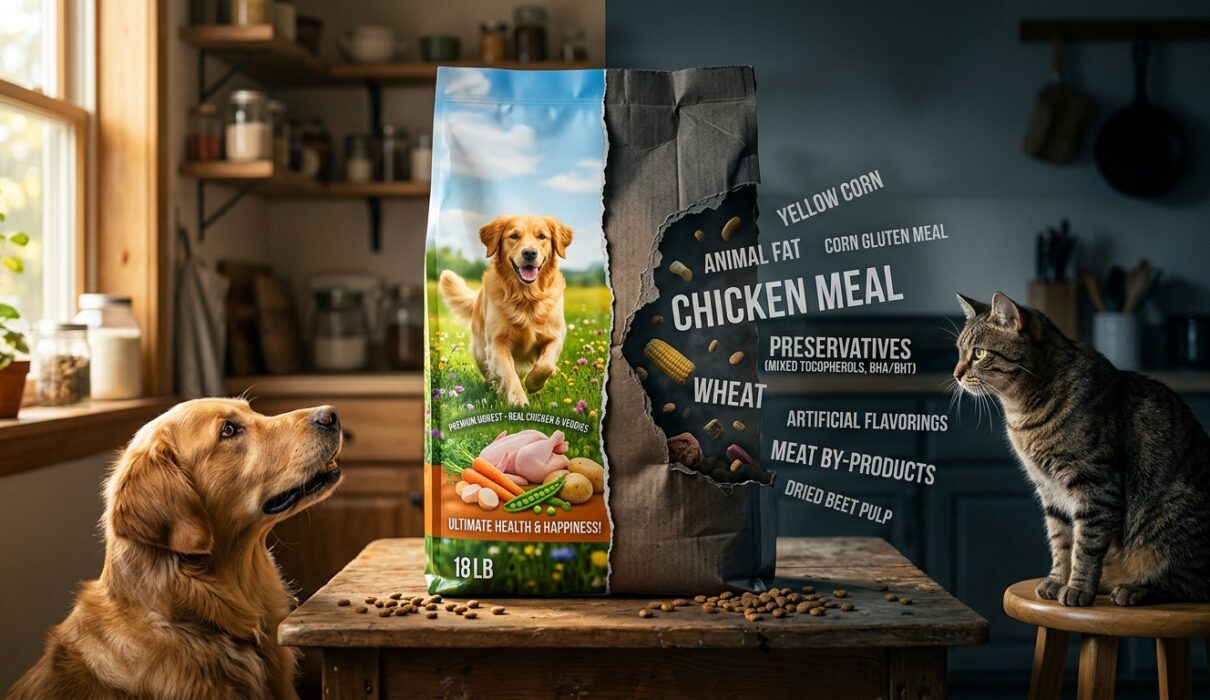
You picked up a bag of dog food. The front shows a golden retriever running through a field. There’s a chicken on the label. Maybe some vegetables too.
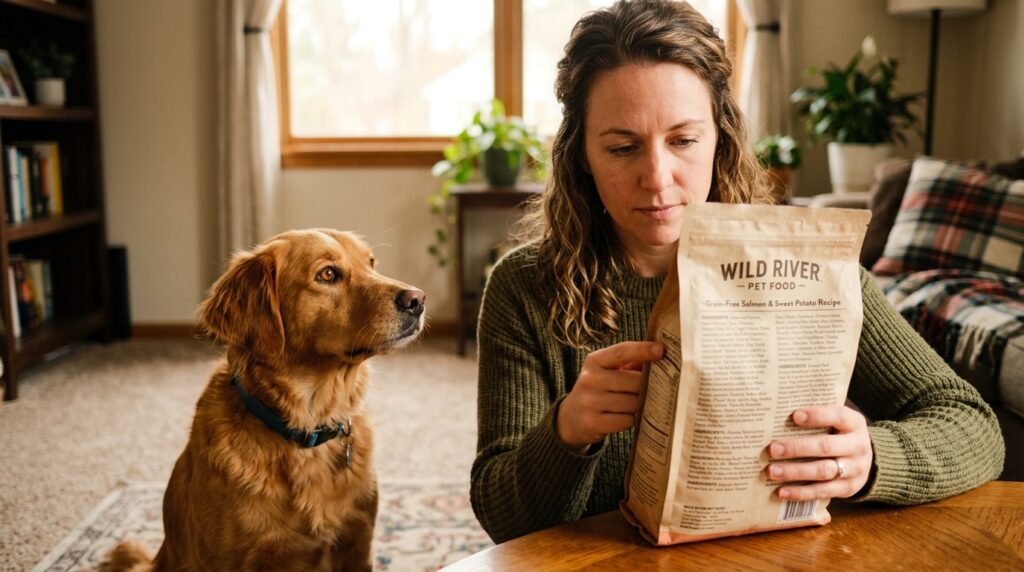
Then you flip it over and suddenly you’re reading something that looks like a chemistry exam.
“Chicken meal.” “Ground corn.” “Tocopherols.” “Crude fiber.”
What does any of that actually mean for your dog or cat?
Here’s the truth: most pet owners never really learn how to read a food label and food companies know it. That’s why the front of the bag is all marketing, and the actual information is crammed in small print on the back.
This guide changes that. We’ll break down every major ingredient category, explain what the label actually tells you, and help you make smarter choices, whether you’re buying a 50 lb dog food container or a small bag of specialty cat food.
Quick Answer: What Should Be in Good Pet Food?
Quality dog and cat food should lead with a named protein source (like chicken, salmon, or beef) as the first ingredient, followed by digestible carbohydrates, healthy fats, and a complete set of vitamins and minerals.
The AAFCO nutritional adequacy statement on the label tells you whether the food meets established nutritional standards for your pet’s life stage. If that statement is missing, put the bag back.
Understanding Dog Food Ingredients: The Big Five
Every pet food is built around five core ingredient categories. Here’s what each one does and what to look for.
1. Protein: The Foundation of Every Good Pet Food
Protein is the most important ingredient in your dog or cat’s diet. It provides essential amino acids that build muscle, repair tissue, grow healthy skin and coat, and support the immune system.
Good protein sources include:
- Whole meats: chicken, beef, lamb, turkey, salmon
- Fish: whitefish, sardine, herring
- Plant-based proteins: soy, lentils (used more in cat and dog food than you’d think)
You’ll also see terms like “chicken meal” on labels and this confuses a lot of people.
So what is chicken meal in dog food?
Chicken meal is simply chicken that has been cooked down and dried to remove moisture. What’s left is a concentrated protein powder. It actually contains more protein by weight than whole chicken, because whole chicken is about 70% water.
So “chicken meal” isn’t a dirty word in fact, seeing it as the second or third ingredient after whole chicken is actually a sign of a protein-rich formula. According to the Association of American Feed Control Officials (AAFCO), meals must come from clean, rendered tissue and cannot contain feathers, heads, feet, or intestines. (Source: AAFCO Official Publication)
The ones to be cautious about: “meat meal” or “animal meal” with no species named. When there’s no species declaration, you don’t know what you’re getting.
2. Carbohydrates: Energy and Gut Health
Carbohydrates get a bad reputation in the pet food world, but they serve real functions. They provide energy, support healthy digestion through fiber, and help hold dry kibble together during manufacturing.
Common carbohydrate sources:
- Rice (highly digestible, gentle on sensitive stomachs)
- Barley and oats (good fiber sources)
- Sweet potato (nutrient-dense)
- Peas and lentils (also contribute protein)
- Corn and wheat (often labeled as “fillers”, but they do provide fiber and energy)
A note on “fillers”: this word gets thrown around a lot in pet food marketing, but fiber sources like beet pulp, chicory root, and powdered cellulose genuinely support colon health and normal digestion. They’re not empty padding, they have a nutritional purpose.
3. Fats: More Important Than Most Owners Realize
Fat is the most energy-dense nutrient in pet food, and it does far more than just make food taste good.
Healthy fats, especially those rich in omega-3 and omega-6 fatty acids, support joint health, reduce inflammation, maintain a shiny coat, and support brain and nerve function.
Quality fat sources include:
- Fish oil (excellent omega-3 source)
- Chicken fat (highly digestible for dogs)
- Flaxseed (plant-based omega-3)
- Sunflower or canola oil
The guaranteed analysis on the label shows crude fat as a minimum percentage. For most adult dogs, a fat content of 10–15% on a dry matter basis is appropriate. Active dogs and puppies need more; senior or overweight dogs typically need less.
4. Vitamins and Minerals: The Invisible Workhorses
Dogs and cats need a wide range of micronutrients to stay healthy: Vitamins A, D, E, K, B-complex vitamins, calcium, phosphorus, zinc, selenium, iodine, iron, and more.
These nutrients support everything from bone density and immune function to thyroid health and skin integrity.
In most commercial pet foods, synthetic vitamins and minerals are added to ensure the formula meets AAFCO nutritional profiles. This is completely normal and safe, it’s how manufacturers guarantee consistent nutrition across every bag or can.
One thing worth checking: the calcium-to-phosphorus ratio. For dogs, AAFCO recommends a ratio between 1:1 and 2:1. An imbalance, especially in homemade or raw diets, can cause long-term bone problems. (Source: ASPCA Animal Poison Control Nutrition Resources)
5. Preservatives and Additives: Natural vs. Artificial
Preservatives extend shelf life and keep food from going rancid. They’re necessary, especially in dry kibble.
Natural preservatives include:
- Mixed tocopherols (vitamin E)
- Ascorbic acid (vitamin C)
- Rosemary extract
Artificial preservatives include:
- BHA and BHT
- Ethoxyquin
Many pet owners prefer to avoid artificial preservatives where possible. Natural preservatives are effective and increasingly standard in quality brands. Check your label, it will say which type is used.What Is a Raw Food Diet for Cats? (And Is It Safe?)
Raw food diets for cats have grown in popularity, particularly among owners looking for minimally processed, species-appropriate nutrition.
A raw food diet for cats typically includes:
- Raw meat (chicken, rabbit, turkey, fish)
- Raw organ meats (liver, kidney)
- Bone (ground, for calcium)
- Small amounts of vegetables or supplements
The appeal is real: cats are obligate carnivores, meaning they biologically require animal protein to survive. A diet close to what cats eat in the wild makes intuitive sense.
But the risks are also real.
The FDA and the American Veterinary Medical Association (AVMA) have both raised concerns about raw pet food, citing risks of bacterial contamination, particularly Salmonella and Listeria, that can affect not just your cat, but your whole household. (Source: FDA Raw Pet Food Safety)
If you’re considering a raw food diet for your cat, work with a board-certified veterinary nutritionist to ensure the diet is complete and balanced. A raw diet that’s nutritionally incomplete is worse than a good commercial kibble.
How Long Can Wet Cat Food Be Left Out?
This question comes up constantly and the answer is more important than most owners think.
Wet cat food should not be left out for more than 1–2 hours at room temperature.
Once opened, wet food is exposed to bacteria. In warm environments, bacterial growth accelerates significantly. Leaving wet food out all day, especially in summer creates a genuine contamination risk.
Safe handling tips:
- Refrigerate unused wet food immediately in a sealed container
- Discard refrigerated wet food after 3–4 days
- Bring refrigerated food to room temperature before serving (cats often reject cold food)
- Never leave wet food in direct sunlight or near a heat source
Using a cat food mat under your cat’s bowl makes cleanup much easier and it helps prevent the bowl from sliding. Silicone mats are easy to sanitize, which matters when you’re dealing with wet food residue.
How to Read a Dog Food Label (Without a Science Degree)
Here are the key sections on every pet food label and what each one actually tells you:
The Ingredient List
Ingredients are listed in descending order by weight heaviest first. The first five ingredients make up the bulk of the formula.
Ideally, the first ingredient should be a named protein (chicken, beef, salmon). Watch out for vague terms like “meat” or “animal protein” without species identification.
One important nuance: ingredients are weighed before cooking. Whole chicken contains a lot of water, so it weighs more raw than it will after processing. This is why “chicken meal”, a concentrated protein source, often appears further down the list but still contributes significant protein to the final product.
The Guaranteed Analysis
This shows minimum and maximum percentages of:
- Crude protein (minimum)
- Crude fat (minimum)
- Crude fiber (maximum)
- Moisture (maximum)
Note the word “crude”, this refers to the analytical method used to measure these nutrients, not their quality. Crude protein simply means total nitrogen measured and multiplied by a conversion factor. It doesn’t tell you the source of that protein.
The AAFCO Nutritional Adequacy Statement
This is the most important line on the entire label.
It will say something like: “[Product name] is formulated to meet the nutritional levels established by the AAFCO Dog Food Nutrient Profiles for [life stage].”
This tells you:
- Whether the food is complete and balanced (or just a supplement or treat)
- Which life stage it’s designed for: puppy/growth, adult maintenance, all life stages, or senior
If a food says “for intermittent or supplemental feeding only”, it is not suitable as a main diet.
Calorie Content
Listed as kilocalories per kilogram and per familiar unit (per cup or per can). This is critical for portion control, especially for dogs prone to weight gain.
Dog Food Storage: What You Need to Know About 50 lb Containers
If you buy in bulk, common for multi-dog households or large breeds, proper storage matters a lot.
A 50 lb dog food container or dog food container 50 lbs keeps dry kibble fresh, protects against moisture and pests, and preserves the fat content from going rancid.
Best practices for bulk dog food storage:
- Use an airtight, hard-sided container (not the original bag alone)
- Store in a cool, dry location: away from direct sunlight and heat
- Don’t mix old and new kibble: finish the old batch first to avoid staleness building up at the bottom
- Check the best-by date before buying bulk: you want enough time to use it before it expires
- Clean the container between refills to prevent rancid fat buildup
Some owners keep the original bag inside the container, as the bag is printed with lot numbers and expiration dates useful in case of a recall. That’s a smart habit.
Brands that specialize in bulk and institutional pet food production: including companies like Golden Pet Manufacturing: produce large-format products specifically designed for kennels, shelters, and multi-pet households where storage efficiency matters.
Ingredients to Avoid in Pet Food
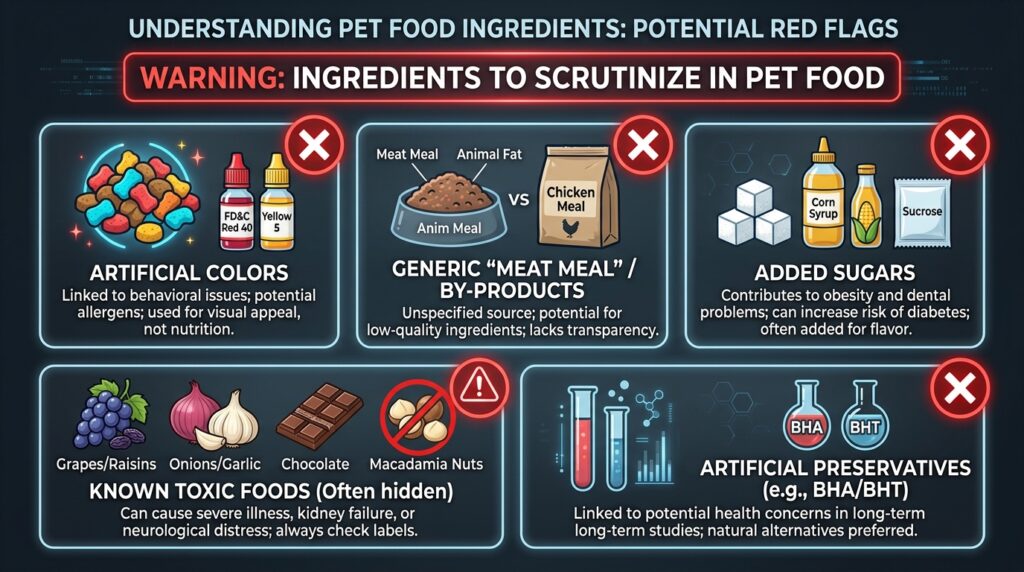
Not everything on an ingredient list is equal. Watch out for:
- Unnamed protein sources: “meat meal,” “animal fat,” “poultry by-product” with no species named
- Artificial colors: serve no nutritional purpose; added purely for human appeal
- Excessive sugar or sweeteners: unnecessary and potentially harmful long-term
- Garlic powder and onion powder: both toxic to dogs and cats, even in small amounts over time
- BHA and BHT in high quantities: though approved, some owners prefer to avoid these artificial antioxidants
A note on dog food nuts: actual tree nuts like macadamia nuts are toxic to dogs, even small amounts can cause weakness, vomiting, and neurological symptoms. Peanut butter (technically a legume) is generally safe in small quantities as long as it contains no xylitol. Always check before sharing any nut-based product with your dog. (Source: ASPCA Animal Poison Control Center)
When to Worry: Signs Your Pet’s Food Isn’t Working
Monitor your pet regularly when feeding any diet. Speak to your vet if you notice:
- Dull, dry, or excessively shedding coat
- Persistent loose stools or constipation
- Unexplained weight loss or gain
- Low energy or reduced interest in play
- Recurring skin irritation, itching, or ear infections
- Vomiting after meals more than occasionally
- Excessive gas or bloating
These can all signal a nutritional mismatch, whether it’s an ingredient sensitivity, an imbalanced formula, or a food that simply doesn’t suit your individual pet.
What You Can Do at Home
Making smarter pet food decisions doesn’t require a nutrition degree. Here’s a simple checklist:
- Flip the bag before you buy: check the ingredient list and AAFCO statement before the front-panel marketing
- Match the formula to your pet’s life stage: puppy, adult, and senior formulas have meaningfully different nutritional profiles
- Transition slowly: when switching foods, mix old and new over 7–10 days to avoid digestive upset
- Store food properly: especially bulk purchases in large containers
- Track your pet’s response: coat, energy, digestion, and weight are your real-world quality indicators
What You Should Avoid
- Don’t choose food based on the front label alone: marketing claims like “natural,” “premium,” or “holistic” have no regulatory definition
- Don’t switch foods suddenly: it causes unnecessary digestive upset
- Don’t leave wet food out all day: especially in warm weather
- Don’t assume grain-free is safer: the FDA has flagged potential cardiac risks in certain grain-free formulations
- Don’t supplement unnecessarily: adding vitamins to an already AAFCO-complete diet can cause nutrient toxicity
When to Visit a Veterinarian
Schedule a vet visit regarding your pet’s diet if:
- Your pet has a diagnosed condition (kidney disease, diabetes, IBD, allergies) that requires a therapeutic diet
- You’re considering a raw food diet for your cat or dog, these require careful planning to be nutritionally complete
- Digestive or skin issues persist after a food transition
- Your pet is losing or gaining weight without an obvious reason
- You’re unsure which formula is right for your pet’s age, size, or breed
Your vet can also refer you to a board-certified veterinary nutritionist for complex cases, particularly if you’re considering home-cooked or raw diets.
Real-Life Scenario
A first-time dog owner brought home a Labrador puppy and picked up a bag of food that had a large “NATURAL PROTEIN” claim on the front. It looked impressive.
A few weeks in, the puppy had loose stools daily and a dull coat. The owner brought it to the vet, who flipped the bag over and pointed out two things: the food had no AAFCO statement for “growth” (it was labelled for adult maintenance only), and the first protein source was “meat meal”, species unspecified.
They switched to a puppy formula from a brand with a clear AAFCO growth statement and named protein sources. Within two weeks, digestion normalized and the coat improved significantly.
The lesson: the back of the bag tells the real story.
Frequently Asked Questions
What is chicken meal in dog food, is it bad? No. Chicken meal is simply dried, cooked chicken with moisture removed. It’s a concentrated protein source and is completely safe. It becomes a concern only when listed as “meat meal” or “poultry meal” with no named species.
How long can wet cat food be left out safely? No more than 1–2 hours at room temperature. After that, refrigerate in a sealed container and discard after 3–4 days. Don’t leave wet food out overnight.
What’s the best size dog food container for a 50 lb bag? Look for an airtight container with at least a 50–60 lb capacity, roughly 65–75 litres. Gamma-seal lids or snap-lock containers work best for keeping moisture and pests out.
Is a raw food diet safe for cats? It can be nutritionally appropriate if properly formulated, but it carries bacterial contamination risks for both cats and humans. Always consult a veterinary nutritionist before starting a raw diet.
Are dog food ingredients like peas and lentils safe? Generally yes, but the FDA has been investigating a potential link between legume-heavy, grain-free diets and dilated cardiomyopathy (DCM) in certain dog breeds. This research is ongoing. Consult your vet if your dog’s current food is heavily legume-based.
Explore More on The Pet Blueprint
If you found this guide helpful, you might also want to read:
- [Fresh Dog Food vs Kibble: Which Is Actually Better for Your Dog — thepetblueprint.com]
- [Dog Food Allergies: How to Identify Triggers and Eliminate Them Safely — thepetblueprint.com]
- [Senior Dog Nutrition: What Changes After Age 7 and How to Adjust — thepetblueprint.com]
Final Thoughts
Reading a pet food label doesn’t have to be overwhelming. Once you know what to look for, the AAFCO statement, the ingredient order, the guaranteed analysis, and the protein sources, it takes about 60 seconds to evaluate any bag or can.
Your pet eats the same food every single day. It’s worth 60 seconds.
Flip the bag. Check the back. And when in doubt, ask your vet, not the packaging.
Sources referenced in this article:
- AAFCO Official Publication — aafco.org
- FDA Raw Pet Food Safety — fda.gov
- ASPCA Animal Poison Control Center — aspca.org
- American Veterinary Medical Association (AVMA) — avma.org






![[Fresh Dog Food vs Kibble: Which Is Actually Better for Your Dog — thepetblueprint.com]](https://thepetblueprint.com/wp-content/uploads/2026/04/Fresh-Dog-Food-vs-Kibble-Which-Is-Better-for-Your-Dog.png)
8 Comments