

 By
By Written by The Pet Blueprint, Researched using guidelines from AAFCO, AVMA, and ASPCA
Disclaimer: This content is for informational purposes only and does not replace professional veterinary advice. Always consult a licensed veterinarian before making significant changes to your dog’s diet.
The Dog Food Debate That Every Owner Faces
Walk into any pet store today and you’ll notice something has changed. The refrigerated section keeps getting bigger. Brands like Freshpet are sitting right next to the milk and cheese and dogs are apparently eating better than some of us.
But here’s what no one really tells you: fresher doesn’t automatically mean better. And expensive doesn’t always mean right for your dog.
Whether you’re questioning your current kibble brand, eyeing that refrigerated dog food section, or wondering “is Freshpet actually good for dogs?” , this guide gives you a straight, honest answer.
No brand bias. No fluff. Just what your dog actually needs.
Table of Contents
Quick Answer: Fresh Dog Food vs Kibble , Which Wins?
Neither wins universally. Both can be nutritionally complete when chosen carefully.
Fresh dog food offers less processing and better palatability. Kibble offers convenience, affordability, and long shelf life. The best choice depends on your dog’s health, age, digestion, and your budget not trends.
What Is Refrigerated Dog Food, Really?
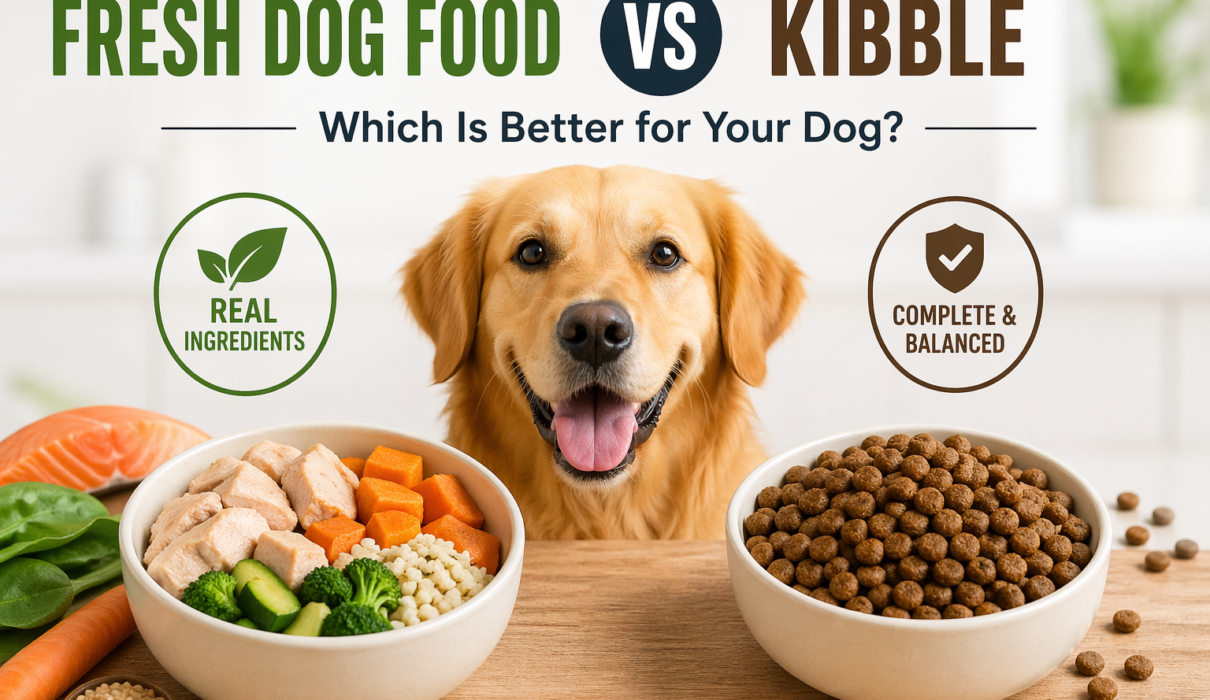
Refrigerated dog food sometimes called fresh dog food is made from real, minimally processed ingredients like meat, vegetables, and whole grains. Unlike dry kibble, it skips the high-heat extrusion process that can degrade some nutrients.
Most refrigerated options are:
- Gently cooked at lower temperatures
- Free from artificial preservatives
- Made with identifiable, whole ingredients
- Stored cold to stay fresh without chemical additives
Brands like Freshpet popularized this category by bringing refrigerated pet food into mainstream grocery stores. According to the American Pet Products Association (APPA), the fresh and refrigerated pet food segment has grown significantly over the past decade, driven by owners who want transparency in their pet’s diet. (Source: APPA Pet Industry Market Size)
One important note: not all fresh food is nutritionally complete. Some recipes require added supplements. Always check whether a formula meets AAFCO (Association of American Feed Control Officials) nutritional standards before buying.
What Is Kibble, and Why Do Most Dogs Still Eat It?
Kibble dry dog food is made by mixing ingredients into a dough, cooking it at high temperatures, and extruding it into those familiar little pellets. It’s then dried and sometimes coated with fats or flavor enhancers.
Is it glamorous? No. Does it work? For most dogs, absolutely.
The reason kibble has dominated the pet food market for decades is simple: it’s reliable, affordable, shelf-stable, and when formulated well, it meets a dog’s complete nutritional needs. Most quality kibble brands are AAFCO-compliant, meaning they meet established standards for essential nutrients.
Fresh Dog Food vs Kibble: The Real Comparison
1. Ingredient Quality and Processing
Fresh food wins on processing level. Minimal heat means fewer nutrients are damaged during preparation. You can also read the ingredients : chicken, sweet potato, brown rice without needing a chemistry degree.
Kibble involves high-heat extrusion, which can reduce the bio-availability of some vitamins and proteins. To compensate, manufacturers add synthetic vitamins back in. It works, but it’s not the same as getting nutrients from whole food sources.
2. Digestibility
Fresh dog food is generally easier to digest, particularly for dogs with sensitive stomachs. The ingredients are closer to their natural form, which means less work for your dog’s gut.
A 2021 study published in the Journal of Animal Science found that dogs fed fresh, minimally processed diets showed improved digestibility compared to those fed extruded kibble. (Source: Oxford Academic – Journal of Animal Science)
That said, every dog is different. Some dogs digest high-quality kibble perfectly well with zero issues.
3. Palatability (Taste)
Fresh food wins and it’s not even close. Dogs go wild for it. This makes refrigerated dog food a strong option for picky eaters, senior dogs with reduced appetite, or dogs recovering from illness.
If your dog treats every meal like a chore, fresh food might solve that problem immediately.
4. Nutritional Balance
This is where things get nuanced. A well-formulated kibble is often more reliably balanced than a poorly formulated fresh food brand. Why? Because established kibble brands have decades of nutritional research and strict quality control behind them.
Fresh food can be excellent or it can lack key nutrients like calcium, phosphorus, or specific vitamins if the recipe isn’t carefully designed. Always check for the AAFCO statement on fresh food packaging.
5. Cost
Let’s be honest: fresh dog food is expensive. Depending on your dog’s size, switching to a fully fresh diet can cost 3–5 times more than premium kibble.
For a large breed dog, that difference can be significant every single month. Budget is a real factor and choosing affordable kibble over fresh food you can’t consistently afford is the smarter long-term decision.
6. Convenience and Shelf Life
Kibble is the clear winner here. Store it in a sealed container, no refrigeration needed, and it lasts weeks to months. Refrigerated dog food, by contrast, needs to stay cold, has a short window once opened, and takes up fridge space.
For busy households, multi-dog families, or anyone travelling with their pet, kibble is simply easier to manage.
Is Freshpet Good for Dogs? (Honest Answer)
This is one of the most searched questions in pet nutrition and for good reason. Fresh-pet is currently the most widely available refrigerated dog food brand in the US, stocked in thousands of grocery and pet stores.
Here’s the honest breakdown:
What Freshpet does well:
- Uses real, recognizable ingredients (chicken, beef, vegetables)
- Minimal artificial preservatives
- Multiple formulas for different life stages and sensitivities
- AAFCO-compliant recipes available
What to watch for:
- Not all Freshpet recipes are equal, some are higher quality than others
- It’s significantly more expensive than most kibbles
- Transitioning away from it can be difficult once your dog gets used to the taste
Overall, Fresh-pet can be a genuinely good choice for healthy dogs, especially those with sensitive digestion, low appetite, or food sensitivities as long as you choose an AAFCO-compliant formula appropriate for your dog’s life stage.
The ASPCA recommends consulting your veterinarian before switching to any new diet, including fresh or refrigerated options. (Source: ASPCA Nutrition Tips)
The “Eat Your Own Dog Food” Standard, Why It Matters
There’s a well-known concept in the tech world: “eat your own dog food.” It means: use the product you make. Stand behind it completely.
In the pet food world, this translates to a simple question: Would the brand’s founders feed this to their own dogs?
It’s a useful filter. When choosing between dog for dog pet food brands, look for:
- Full ingredient transparency — can you identify everything on the label?
- AAFCO compliance — does it meet established nutritional standards?
- Third-party testing — does the brand submit to independent quality checks?
- Honest marketing — does the brand make claims backed by evidence, or just buzzwords?
Brands that genuinely stand behind their recipes will make this information easy to find. Those that don’t are worth questioning.
When to Worry: Signs Your Dog’s Diet Isn’t Working
Regardless of whether you feed fresh or kibble, watch for these red flags:
- Chronic loose stools or constipation
- Dull, flaky, or excessively itchy coat
- Low energy or lethargy not explained by other causes
- Sudden weight loss or weight gain
- Recurring ear infections or skin irritation (often linked to food sensitivities)
- Bloating or excessive gas after meals
Any of these signs especially if they started after a diet change, warrant a vet visit.
What You Can Do at Home: Making the Right Choice
If you’re considering switching to fresh dog food:
- Start with a 7–10 day transition, mix increasing amounts of fresh food with current food to avoid digestive upset
- Check the AAFCO statement, make sure the formula is labelled as “complete and balanced” for your dog’s life stage
- Monitor digestion closely for the first two weeks
- Weigh the cost, calculate the monthly expense for your dog’s size before committing
- Keep your vet in the loop, especially if your dog has existing health conditions
If you’re sticking with kibble:
- Choose a brand with named protein sources (e.g., “chicken” not “meat meal”) as the first ingredient
- Match the formula to your dog’s life stage, puppy, adult, and senior formulas differ meaningfully
- Store it properly, sealed container, away from heat and moisture
- Check for recalls, use the FDA pet food recall database periodically (Source: FDA Pet Food Recalls)
What You Should Avoid
These are the most common mistakes dog owners make around food choices:
- Don’t switch foods suddenly, always transition gradually over 7-10 days
- Don’t assume “grain-free” means healthier, the FDA has flagged potential links between grain-free diets and dilated cardiomyopathy in some dogs
- Don’t choose fresh food based on how it looks to you , your dog’s nutritional needs are very different from yours
- Don’t ignore your dog’s individual response, even a “top-rated” food can be wrong for a specific dog
- Don’t over-supplement, if a food is already AAFCO-complete, adding extra vitamins or minerals can cause imbalance
When to Visit a Veterinarian About Diet
Book a vet appointment if:
- Your dog has a diagnosed condition (kidney disease, diabetes, pancreatitis, allergies) diet directly impacts these
- You’re considering a homemade fresh diet ,this requires careful nutritional planning, ideally with a board-certified veterinary nutritionist
- Your dog has lost or gained significant weight without explanation
- Digestive issues persist more than 2 weeks after a food transition
- You’re unsure which formula is right for your dog’s life stage or breed size
A vet can also run blood-work to assess whether your dog’s current diet is meeting its nutritional needs something no food label can tell you.
Real-Life Scenario
A Golden Retriever named Bruno had been on the same kibble brand for three years. He was healthy, but his coat looked dull and he’d become increasingly picky leaving food in his bowl daily.
His owner switched him to a refrigerated dog food a Fresh pet recipe with chicken and vegetables. Within two weeks, Bruno was eating every meal eagerly and his coat visibly improved. However, after three months, the monthly cost became unsustainable.
The solution? A mixed feeding approach high-quality kibble as the base, with fresh food as a topper three times a week. Bruno stayed enthusiastic about meals, coat condition held up, and the cost dropped significantly.
The lesson: it doesn’t have to be all or nothing.
Frequently Asked Questions
Is refrigerated dog food safer than dry kibble? Neither is inherently safer. Kibble has a lower bacterial risk due to its low moisture content. Fresh food, if handled properly and stored correctly, is safe but it does carry a slightly higher risk of bacterial growth if left out too long. Always follow storage guidelines.
Is Freshpet good for dogs with sensitive stomachs? For many dogs with mild digestive sensitivity, yes the simpler, minimally processed ingredients can be gentler on the gut. However, if your dog has a diagnosed gastrointestinal condition, consult your vet before switching.
Can I mix kibble and fresh dog food? Yes and many vets recommend it as a practical middle ground. Using kibble as a base and fresh food as a topper gives your dog variety, palatability benefits, and better nutrition without the full cost of an all-fresh diet.
What does “dog for dog” mean in pet food branding? Some brands use the “dog for dog” concept to signal ingredient transparency and quality essentially claiming they’d feed their product to their own dogs. It’s a marketing philosophy as much as a promise, so always back it up by reading the actual ingredient list and nutritional analysis.
Is grain-free fresh dog food better? Not necessarily. Grains like brown rice and oats are digestible and nutritious for most dogs. Unless your dog has a confirmed grain allergy, there’s no strong evidence that grain-free is superior and as noted by the FDA, it may carry its own risks for certain breeds.
You Might Also Find These Helpful
- [How to Read a Dog Food Label: What to Look For and What to Ignore — thepetblueprint.com]
- [Dog Food Allergies: How to Identify and Eliminate Triggers — thepetblueprint.com]
- [Senior Dog Nutrition: What Changes After Age 7 — thepetblueprint.com]
Final Thoughts
Fresh dog food and kibble are not enemies. They’re just different tools for the same goal: keeping your dog healthy and happy.
If you can afford a high-quality refrigerated dog food and your dog thrives on it – go for it. If premium kibble fits your budget and your dog looks great, that’s completely fine too. And if mixing both works for your household – that’s a perfectly valid approach.
The best diet for your dog is the one they do well on, that you can sustain long-term, and that your vet supports.
When in doubt, ask your veterinarian. Not a trend. Not a brand. Your vet.
Sources referenced in this article:
AAFCO Dog Food Nutrient Profiles — aafco.org
American Pet Products Association (APPA) — americanpetproducts.org
Journal of Animal Science — academic.oup.com/jas






2 Comments